
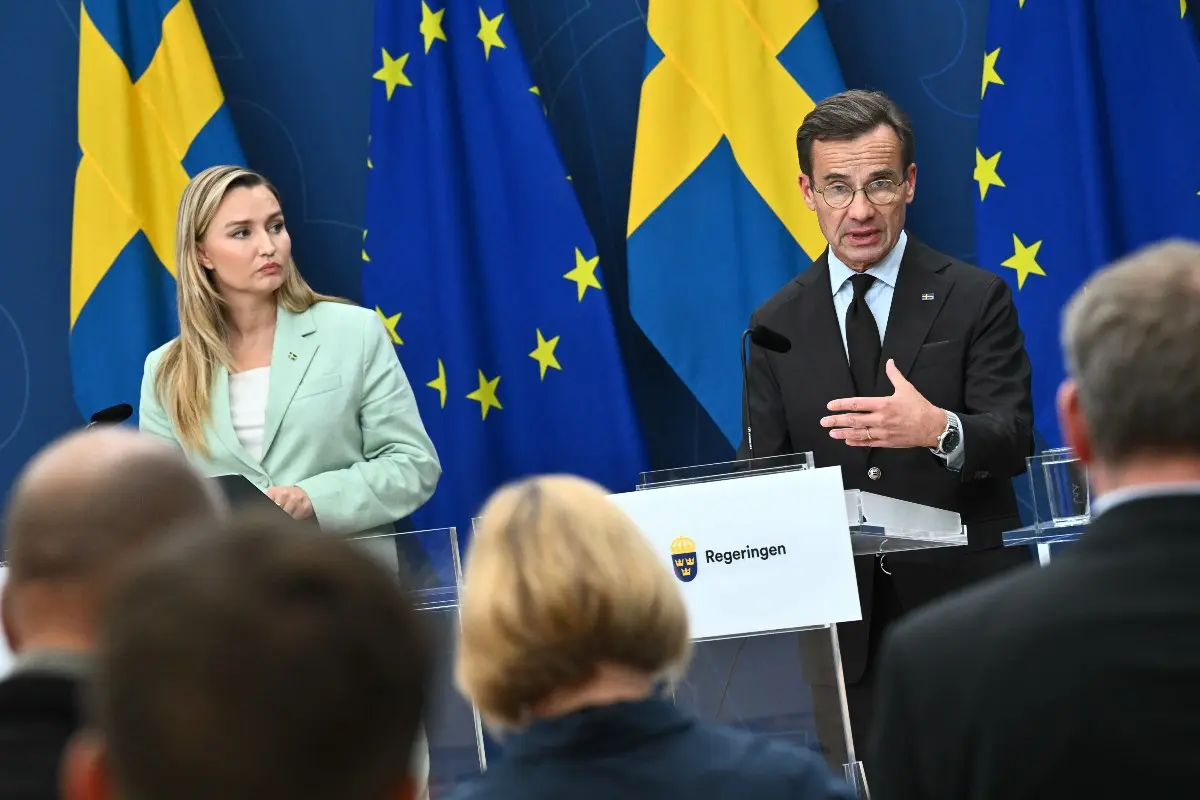
At a joint press conference with the far-right Sweden Democrats, Sweden's prime minister, Ulf Kristersson, said that the tax had been an obstacle to Swedish competitiveness.
"If you want to make sure of the ability to have good air connections and keep Sweden as an international hub, you must make sure not to discriminate against the very competitive advantage that Sweden has," he said. "This is both in line with long-term climate policy and to protect the long country's travel opportunities."
The flight tax was brought in back in 2018 by the previous government coalition of the Social Democrats and the Green Party, and was set at a deliberately low level, with the idea that it could then be successively raised.
At the level it is set at this year, it adds about 76 kronor extra per passenger to a flight to Europe, about 315 kronor to a flight to the USA and about 504 kronor to a flight to Thailand. This year, it is expected to bring in total tax revenues of about 1.8 billion kronor.
At the press conference, the government said that the tax would be scrapped entirely from July 1st next year.
"We are doing this to promote air traffic across the country and to improve accessibility across the country. This will mean, quite simply, lower ticket prices," the Sweden Democrats' group leader, Linda Lindberg, said at the press conference.
The government had previously considered halving the tax but has instead opted to abolish it.
The country's energy and business minister, Ebba Busch, brushed away the concerns that boosting air traffic would increase emissions.
"As far as Sweden's climate goals are concerned, it won't make a huge amount of difference," she said. "Our ambition is that this is going to increase the amount of air passengers which in the long run will mean more air traffic. This is going to affect climate emissions, but that's something we'll look at later on."
Busch said that as most countries in the EU lacked a flight tax, it had been harming Sweden's competitiveness.
"This is extremely important for many companies and for large sections of Swedish industry -- that we can keep our flight connections," she said. "Only a minority of countries in the EU have a flight tax, so this has been a very tough competitive disadvantage for Sweden."
Comments (1)