

A warning triangle
In the event of a breakdown or accident, you must be able to alert approaching traffic. Drivers are expected to position a warning triangle on the road surface in the direction of oncoming traffic as soon as possible.
On roads with a speed of over 50km/h, it needs to be 100 metres behind the car. If the speed limit is below this, it can be a bit closer.
A missing warning triangle can make you fail your MOT and risk a 500 kronor fine if you’re stopped out on the roads.
Winter tyres
This isn’t technically something you have in your car, but is still important to be aware of.
Swedish law states that all cars must be equipped with winter tyres between December 1st and March 31st if the weather conditions require it.
In general, studded winter tyres are better suited for icy roads or on surfaces with hard-packed snow, while stud-free tyres work better on roads with soft snow. Pay attention though: studded tyres are illegal on some streets in major Swedish cities for air pollution reasons.
Studded tyres are allowed between October 1st and April 15th, or in wintery driving conditions.
Equivalents to winter tyres, like snow chains or snow socks, are also accepted, but be aware that you will need to remove these on roads with no snow or ice.
If your car doesn't have winter tyres (or an alternative) or if they are not up to scratch (a tread depth of at least three millimetres), you risk a fine of 1,200 kronor.
Your driving licence
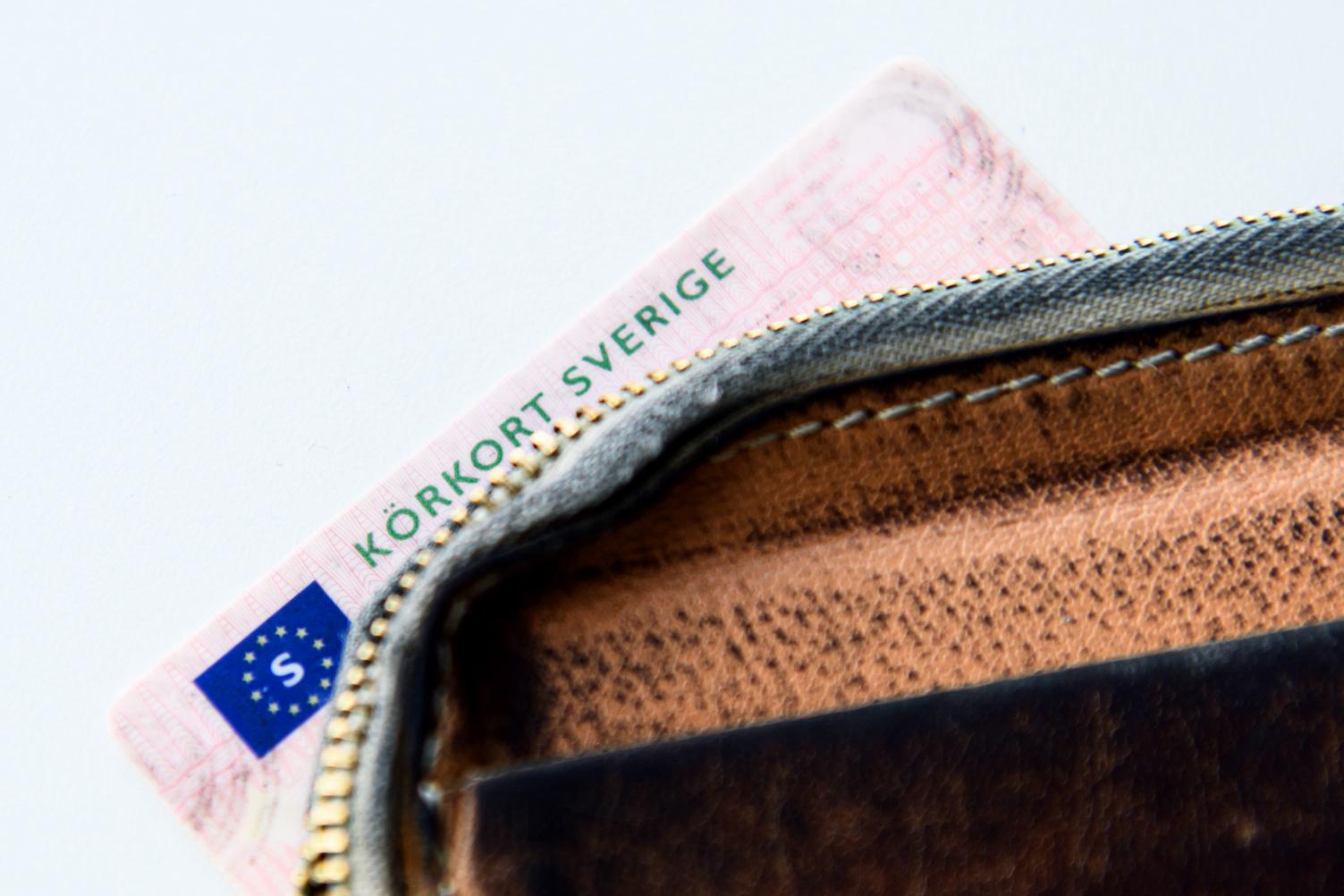
You’re also expected to carry your driving licence with you whenever you’re driving, and you risk a fine of 500 kronor if you’re stopped without it.
There are, however, a few caveats: if you can prove who you are through another valid form of ID, or a passenger who can vouch for your identity, then this can be checked against the licence register.
Of course, if you don’t have a Swedish licence, then you won’t be registered in the Swedish licence register, so you should make sure to always have your foreign licence with you when you’re driving on Swedish roads.
There are also some items which you don’t necessarily need to have with you, but which you might find extremely useful if your car does end up breaking down.
A spare tyre
There’s no law stating that you need a spare tyre, or the tools needed to replace it, in your car, but it’s obviously a good idea to have one.
Remember that the same rules apply to the tread depth of your spare tyre as your normal tyres, so your spare tyre needs to have a depth of at least 1.6mm in the summer, or 3mm in the winter.
A high-visibility vest
If you’ve spent much time in Sweden during the colder months, you’ll know that the days get dark fast. It’s not a legal requirement to carry a high-visibility vest with you, but in situations where your car breaks down in the dark or in bad weather with low visibility, it’s a good idea to make sure other road users can see you. For families, consider buying enough vests for everyone, so you’re all protected if you need to leave the car.
For even better visibility you can pick up a battery-powered warning light or nödljuspuck for around 100-200 kronor, which you can stick on your car with a magnet or place on the road behind your car to alert other drivers to your presence.
Tools for ice and snow
Another tip for the winter months is to make sure you have an ice scraper, a brush to remove powdery snow from your roof or bonnet, small shovel, a tow rope and a bag of sand in your car, so you can dig your wheels out of the snow and get some more grip on your tyres if you get stuck. Make sure your windshield wiper fluid contains antifreeze, too, and maybe keep a spare bottle lying around in case it runs out.
READ ALSO: How to stay safe on snowy Swedish roads
Supplies if you get stuck
No matter what time of year your car breaks down, you don’t want to be stuck on the roads for hours with no supplies. Make sure you have starter cables so you can get your car going if it refuses to start, as well as a torch (your headlights might not work in an emergency situation), a blanket, a few bottles of water and some shelf-stable high-energy foods to keep you going.
Comments (2)