

Sweden's Prime Minister Ulf Kristersson announced on January 12th that Sweden would contribute three ships and a surveillance aircraft to prevent sabotage attacks on power lines and telecoms cables under the Baltic Sea, part of a broad Nato effort to increase surveillance in the Baltic.
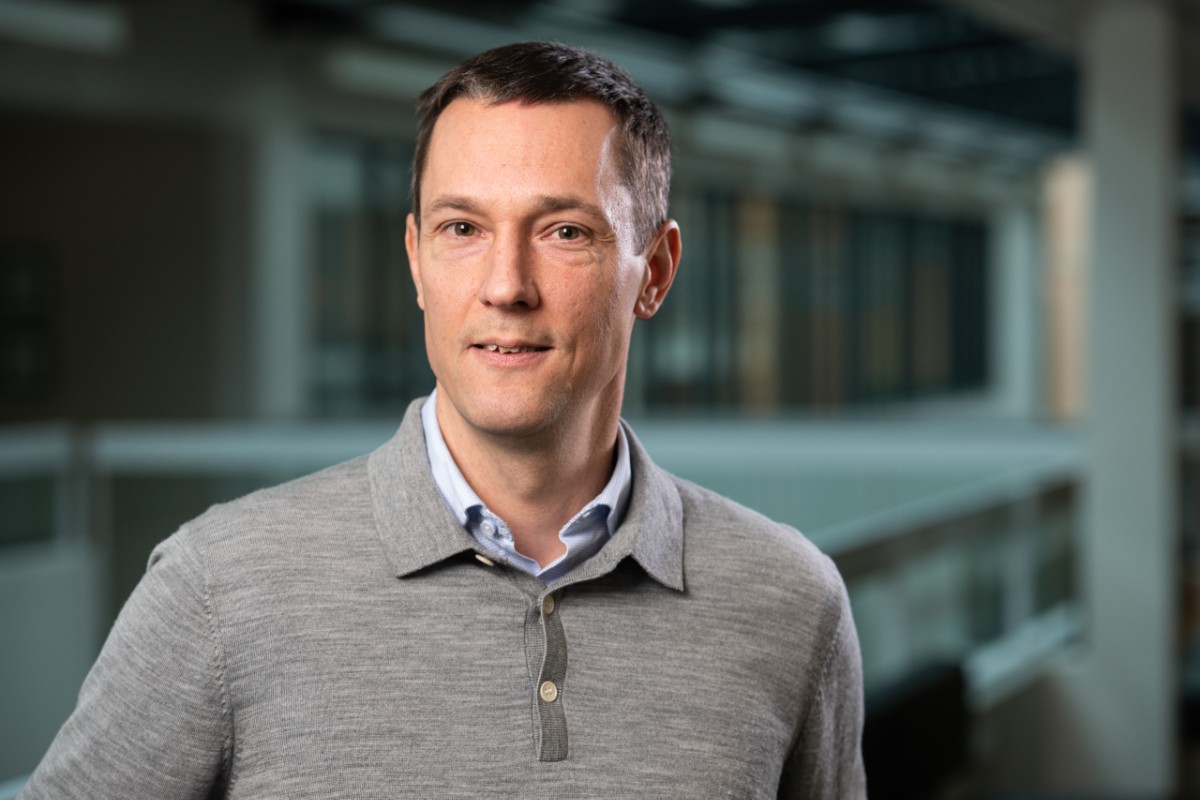
But Liwång, a marine architect specialised in the security of marine infrastructure, told The Local that Sweden's power interconnectors and telecoms cables spanned too great a distance to be easily monitored or protected from sabotage.
Nonetheless, he said, increasing Nato's naval presence was still useful.
"It's very tough to actually protect the infrastructure. However, I think these kinds of measure are important to increase the cost of doing this, accidentally or deliberately. If there are more ships in the Baltic that can act if there is something suspicious happening, they will know that the risk of getting stopped and interrogated and possibly getting follow-up actions is greater," he said.
On December 25th, the Estlink 2 electricity cable and four telecom cables linking Finland and Estonia were damaged, just weeks after two telecom cables in Swedish waters of the Baltic Sea were severed.
The heads of the Baltic states are set to meet in Helsinki on Tuesday to discuss in more depth what measures can be taken to prevent further damage to Baltic undersea infrastructure.
READ ALSO:
- Sweden 'not at war but not at peace either'
- Swedish navy recovers ship's anchor suspected of cable damage
- Sweden sends ship to aid probe over cut sea cable
That the Finnish police managed to stop Eagle S, the oil tanker whose dragged anchor did the damage to Estlink 2, move it to the Finnish port of Porvoo and detain the crew, might, Liwång said, go some way to deterring other vessels from damaging undersea infrastructure.
"Hopefully, it means that fewer crews and fewer ships will be interested in being part of this, because I don't think that the incentives for these possible sabotages are on board, they are somewhere else, and the crews are convinced or bribed in some way."
It is much harder for Sweden to police its undersea infrastructure than it is for Finland to protect infrastructure in the most easterly arm of the Baltic, he said.
"It will not really protect the infrastructure physically, because it's all over the place, and it's very tough for Nato, even with more vessels, to be in all places at the same time and to monitor this in real time."
The Bay of Finland, he said is "relatively narrow", so the Finnish military and the coast guards had enough vessels and helicopters patrol a thin strip of international waters, and and may even have had underwater surveillance in place.
"They had probably identified that there was an anchor dragging within the Bay of Finland while it was happening, and then they were able to get to the site, identify themselves to the crew and inform the crew they were under surveillance quickly, in a matter of hours," Liwång said.
Because the ownership of Eagle S was not transparent, it appeared to be uninsured, and it was transporting fuel that was under sanctions, he added, Finnish authorities then felt empowered to act, with the crew convinced to sail into Finnish waters where they were arrested.
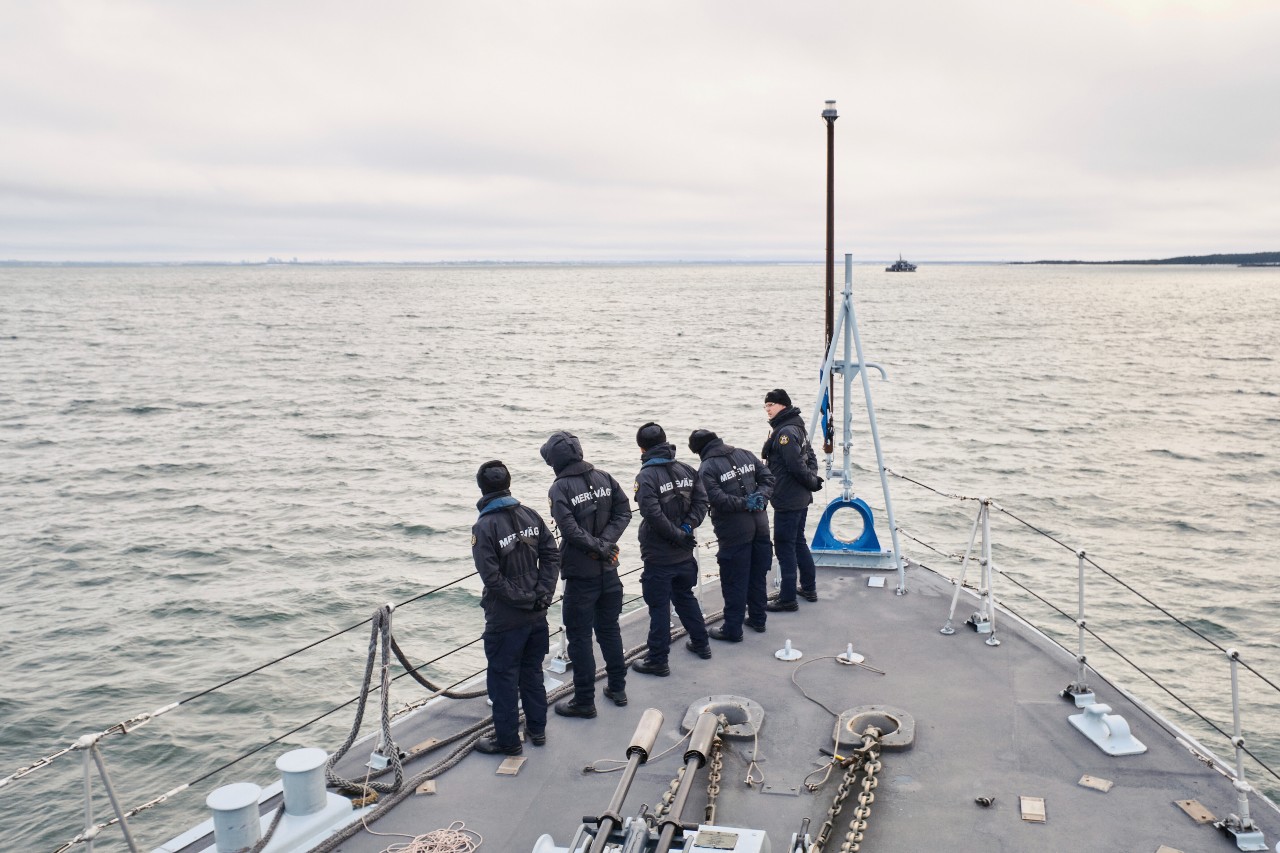
Both the high level of preparation Finland had shown and its prior coordination with other Baltic countries on handling vessels from Russia's "shadow fleet" were worth emulating, but Liwång warned that Swedish undersea infrastructure would always be harder to protect simply because the sea is wider.
"The challenges are related to the medium of water," he explained. "The actual incident takes place on the seabed, and it's not possible to have sensors all over the seabed, and moving around on the water takes time, which means that even though the distances are not extremely great, getting resources to a position where you can actually do something about it takes time. The Baltic is big enough that we cannot really surveil all these places at the same time."
Generally, he said, it takes several hours and sometimes as long as a day to get a vessel with an underwater camera to the site of a suspected act of underwater sabotage. Even then, investigating underwater is time-consuming.
"When things happen underwater, it takes a long time before we have information about what actually happened: sensor ranges in water, communication ranges in water, speed of motion in the water. There no point in getting a fighter aircraft out there, because they cannot do anything. They can fly over the site in high speed, but they cannot get the information we need."
Submarines, he said, were not particularly useful. The most useful vessels, he said, were mine-clearing ships and ships with the capacity to send down unmanned or remotely operated vessels or equipped with sensors that can build a 3D model of the seabed.
The good news, he said, is that Sweden is not that vulnerable to sabotage to undersea infrastructure, provocative as it may be.
"The alternatives on how to reroute data are very diverse. There are on-land alternatives, there are even space alternatives, and there are many different cables you can use between the countries," he explained.
There are fewer power interconnectors, meaning some countries, Estonia in particular, are exposed.
"But for Sweden and Finland, electricity is mostly produced within the country, so it's more a question of being able to sell electricity at some times to other countries, so sea cables are not critical."
The connections could nonetheless be better protected in future by burying cables in deeper trenches in the seabed and duplicating connections, he said.
Even with all of the additional resources announced, he predicted that it would be difficult to prove that incidents like the cutting of the Estlink 2 cable were deliberate acts of sabotage, or to identify who ordered them.
"I think that it will be tough and I think that's it's probably military intelligence that will give them that kind of information, because then you need proof of communication with Russia, if that is the country suspected of giving the orders, or of preparations being made within that country before the incident, plans, bribes, or whatever."
This is not to say there will be no consequences, however. "People will probably be prosecuted in Finland anyway, but you maybe will not be able to prove that this was a deliberate act."
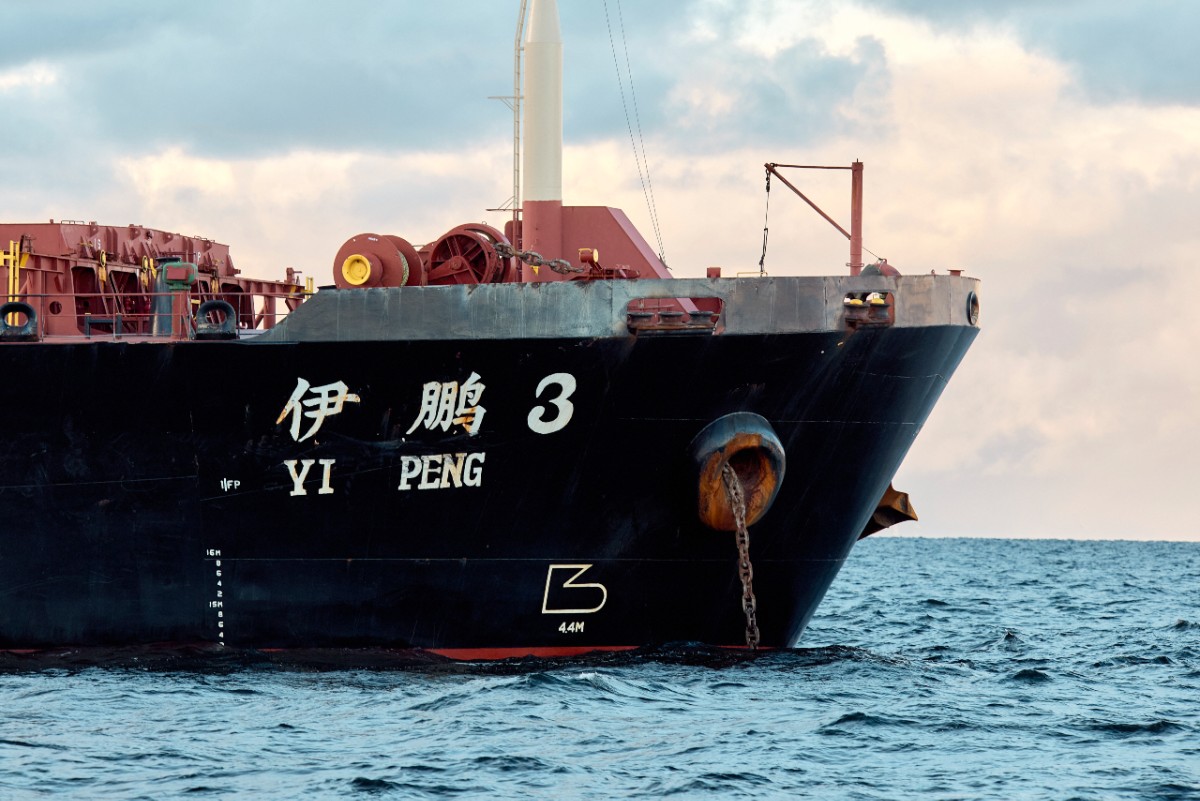
If Russia has been ordering vessels to drag their anchors deliberately to destroy infrastructure, the motive, he said, would simply be to destabilise its Baltic neighbours.
"It's the uncertainty that it creates within the Baltic states and the Nordic states," Liwång argued. "Uncertainty about our societal institutions and whether they can protect us, and then political turmoil which can hopefully weaken Finland and Sweden. That would then be a typical effect that you would want to achieve if this were a sabotage."
This is one of the most positive results Finland can expect from the rapid action it has taken over the past few weeks in response to the Estlink 2 incident, he argued.
"It's a case of actually being able to show the citizens of Sweden, Finland and Estonia that, yes, we have a legal system. We have a legal system to actually can find things out and we can actually prove what happened."
Comments