

In December, the applications for Protected Designation of Origin (PDO) for two varieties of Swedish herring ‒ Ostkustströmming (East coast herring) and Norrlandsströmming (Norrland herring) were finally published in the EU's official journal, giving herring producers outside the designated areas just months to object before they lose the right to use these names.
Ostkustströmming ‒ "East coast herring" ‒ is defined as herring fished between Kristianopel in Blekinge in the south and Öregrund in the north. Norrlandsströmming is defined as everything fished north of the Dalälvan estuary.
Since Kalix löjrom, roe from whitefish caught in the very north of the Bay of Bothnia, got registered back in 2010, Sweden's fish list has been growing. In 2022, Vänerlöjrom, whitefish roe from Lake Vänern, got listed, and in 2023, oysters from Grebbestad, north of Gothenburg, blue mussels from Bohuslän, and rökt vättersik, smoked whitefish from Lake Vättern, all won PDO status. In 2024, Hjälmargös, Zander fish from Lake Hjälmar, made the list.
When Sweden joined the EU in 1995, it focused on getting protection for its alcoholic drinks industry, with Swedish vodka, Swedish aquavit and Swedish punsch (a sickly citrus liqueur), all granted Protected Geographic Origin (PGO) status in 1994.
But over the years some fairly unusual specialities have also made it. We run through some of the stranger ones here.

Kullings kalvdans
Any idea what "colostrum" is? I'm ashamed to say I didn't (or perhaps I've forgotten). Anyway, it's the first milk produced by mammals after giving birth, and it's also the main ingredient for kalvdans, meaning "calf dance", arguably Sweden's most unusual dessert, which won PDO status in 2023.
There's a long tradition in Sweden of making a pudding from this protein and nutrient-rich milk, but Kullings Kalvdans was launched in 2008, when a group of farmers in the countryside north of Gothenburg teamed up to commercialise it, sourcing colostrum from 25 dairy farms with a total of 2,200 cows. If you want a taste, you can find a list of shops selling it here.
Larger dairy farms across Sweden make their own, selling it at their on-site farm shops.

Skånsk spettekaka
At first glance, Skänsk spettekaka or Scanian spit cake (that's spit as in spit-roasted, not spit as in saliva), looks like an elaborate meringue confection, which can make the taste come as a surprise. The cake, which is as you'd expect by the name is cooked on a rotating spit in front of a fire, is less sweet than you might expect, and is typically enjoyed washed down with coffee.
You can buy spettekaka in cafés, gift shops and even supermarkets across Skåne, and even watch the two-hour long process of cooking them at artisanal bakeries like Kristianstads Spettkakan.
Upplandskubb
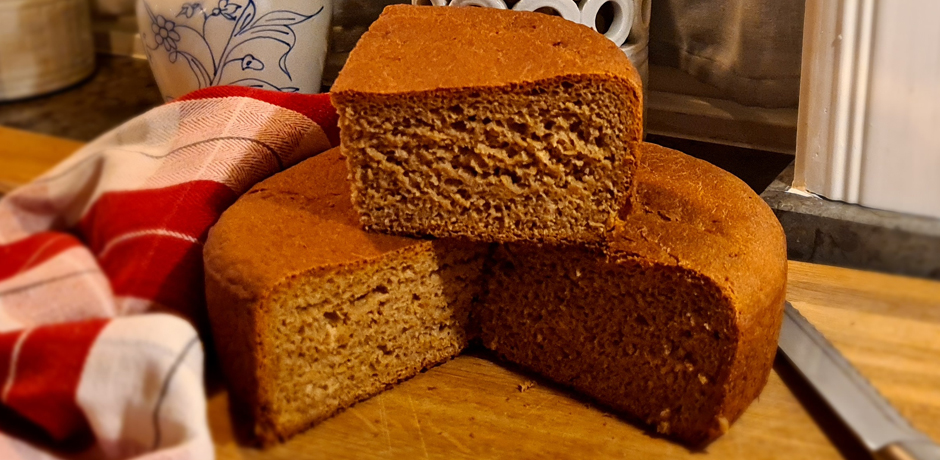
Upplandsskubb is a sweet, dense ryebread which is unusual in that is baked in a cylindrical tin that is then floated in a bain-marie, a pot filled with water, heated on a stove.
To quality for PDO status, the bread must use all parts of the rye grain and use rye grown in Uppland, the region around Uppsala.
The one-man producer, Magnus Berneklint, who runs Upplandskubbkokeriet (the Upplandskubb boilery), sells the bread by mail order or you can order online and pick it up at the "Kubbomaten", which is basically just a shed he has built outside his home in Grillby, near Enköping.
Upplandskubb won PGI status in 2014.

Gränna Polkagrisar
Gränna, a pretty historic town on the shores of Lake Vättern, is a popular stop-off point for people driving between Stockholm and Malmö. The chief attraction is the long row of traditional sweet shops serving and often manufacturing the town's traditional candy canes, Gränna polkagrisar.
Polkagrisar, literally "polka pigs", are made from sugar, glucose, water, natural peppermint oil, vinegar and a natural red colouring, usually cochineal extract. They have been made in Gränna since 1859 and they gained PGI status in 2022.
Skedvi Bröd
This brand of knäckebröd, or crispbread, from Dalarna, has gone from strength to strength since it was saved from closure by a crowdfunding campaign in 2014, when Benny Andersson from ABBA came in as a part-owner. It won Protected Geographical Origin status in 2023.
Cheeses
Sweden has also been slow to register its cheeses, with no new ones registered for 35 years after Sweden joined the EU.
But in 2022, Swedish cheesemakers stepped up a gear, with two new cheeses joining the list: Wrångebäcksost, from Västergötaland, and Sörmlands Ädel, a blue cheese from Södermanland.
Wrångebäcksost is a hard cheese made in Guldkroken, the area around village of Hjo, on the other side of Lake Vättern from Gränne. You can buy the cheese at selected delicatessens online, or on the website of JHB.
Västerbottensost, which is probably Sweden's most famous cheese, does not have PDO status, although it is a registered trademark, meaning it can only be made by the Norrmejerier dairy.
What else is on the list?
The 32 specialities Sweden has so far managed to have protected also include a collection of vegetables, pulses and berries, including salted cucumbers from Östergötland, brown beans från Öland, lentils from Gotland, and allåkerbär, Arctic raspberries, from Norrland.
There are also a couple of meat dishes: vindelnrökt skinka, a type of ham smoked over elm wood, which comes from Västerbotten and hånnlamb, lamb meat from the Gute sheep found on the island of Gotland.
Comments