
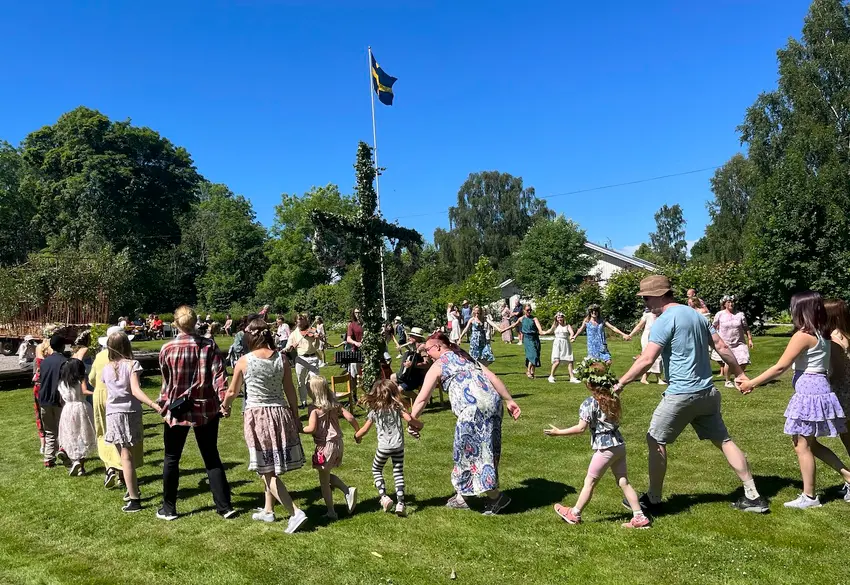
When Swedes talk about celebrating midsommar, they mean Midsummer's Eve, which this year falls on Friday June 20th. Midsummer's Day is always the following day and isn't marked in any particular way other than being an allmän flaggdag, meaning that many official buildings like town halls or similar will fly the Swedish flag on this day.
Why do Swedes celebrate Midsummer?
Midsummer is an ancient festival in the Nordic countries, with the first written mention occurring in the Icelandic sagas in the 14th century.
It's often considered to be a pagan festival, linked to fertility, the longest day of the year and therefore the high point of summer, and it is likely that the festival has its origins in pagan celebrations, but Midsummer actually also has a surprising Christian connection which has been all but forgotten in Sweden.
In fact not much is known about how it was actually celebrated before Sweden became Christian around year 900-1000, with Sweden's Nordiska Museet describing any ideas about how people marked the occasion back then as "very speculative".
In 1555, Olaus Magnus wrote about Midsummer in A Description of the Northern Peoples, describing it as a festival where people of all ages and genders danced around fires to celebrate John the Baptist, who the Bible states was born six months before Jesus on June 24th.
Although Sweden has stopped holding Midsummer bonfires, preferring instead to hold bonfires on Valborgsmässoafton, the last day of April, the tradition has continued in the other Nordic countries, with the name of the Midsummer festival in those countries instead referring to Saint Hans or Johannes, two different Nordic names for John.
In Norway and Denmark, Sankthansaften or Saint Hans Eve is celebrated on June 24th, while Finland celebrates Juhannus and Iceland celebrates Jónsmessa or Jónsvaka.
The majority of Swedes would probably give you a confused look if you asked them which saint they were celebrating on Midsummer's Eve – in fact, the church has at various times throughout Swedish history complained about the raucousness of the Midsummer celebrations and tried to forbid dancing around the maypole due to young people drinking a lot of alcohol and letting loose during the festivities.
One old saying about Midsummer which reflects which reflects the, ahem, promiscuity of young people at this festival goes as follows: Midsommarnatten inte är lång men sätter sju och sjuttio vaggor i gång, or "Midsummer night is not very long but it sets seventy seven cradles in motion".
The festival now holds a place in Swedes' hearts similar to an Independence Day celebration in other countries, the one celebration of pure Swedishness and the highlight of the year's festivities, alongside Christmas.
Why do they dance around a maypole if the festival is held in June?
As mentioned, one of the most iconic features of a Midsummer festival is the maypole, which is decorated in flowers and leaves before guests dance around it in a circle singing songs.
You may be wondering where the maypole, called a majstång in Swedish, got its name, but the truth is there is actually no connection to the month of May or maj, with the maj in majstång instead coming from the Swedish word maja, meaning to decorate something with leaves.
The maypole tradition probably arrived in Sweden from Germany in the Middle Ages, and similar traditions exist in other parts of Europe, although most other maypoles consist of a pole with rings suspended over it, rather than the Swedish maypole which looks more like a cross with a triangle on top, with a ring hanging either side of the pole.
Most Swedes celebrate Midsummer at a private party with friends or family somewhere on an island or in the countryside, but if you don't have access to a summer house, there are plenty of other options for celebrating Midsummer across Sweden, ranging from small village celebrations to large-scale festivals at major tourist attractions in Sweden's larger cities.
Comments