
In a risk assessment, the European Centre for Disease Prevention and Control (ECDC) said the overall risk for the general population in the EU and European Economic Area (EAA) – 30 countries altogether – remained "low".
However, it "recommends that public health authorities in the EU/EEA maintain high levels of preparedness planning and awareness-raising activities to enable rapid detection and response".
The Stockholm-based health body said more imported cases to Europe were "highly likely".
"Due to the close links between Europe and Africa, we must be prepared for more imported clade I cases," ECDC director Pamela Rendi-Wagner said in a statement.
The World Health Organization (WHO) this week declared the rapid spread of the new, more dangerous mpox strain, dubbed Clade 1b, a public health emergency of international concern – the highest alarm the UN agency can sound.
The virus has swept through the Democratic Republic of Congo, killing 548 people so far this year, the country's government said.
Sweden and Pakistan have this week reported the first cases of the virus outside of Africa, with the WHO warning further imported cases of the new strain in Europe were likely.
In an updated risk assessment, the ECDC said that the "overall risk for the EU/EEA general population is currently assessed as low, based on a very low likelihood and a low impact".
However, it added in the statement that the likelihood of infection for people from Europe "travelling to affected areas who have close contact with affected communities is high".
"Additionally, there is a moderate risk for close contacts of possible or confirmed imported cases" to Europe.
The infectious disease is caused by a virus transmitted to humans by animals but can also spread human-to-human through close physical contact.
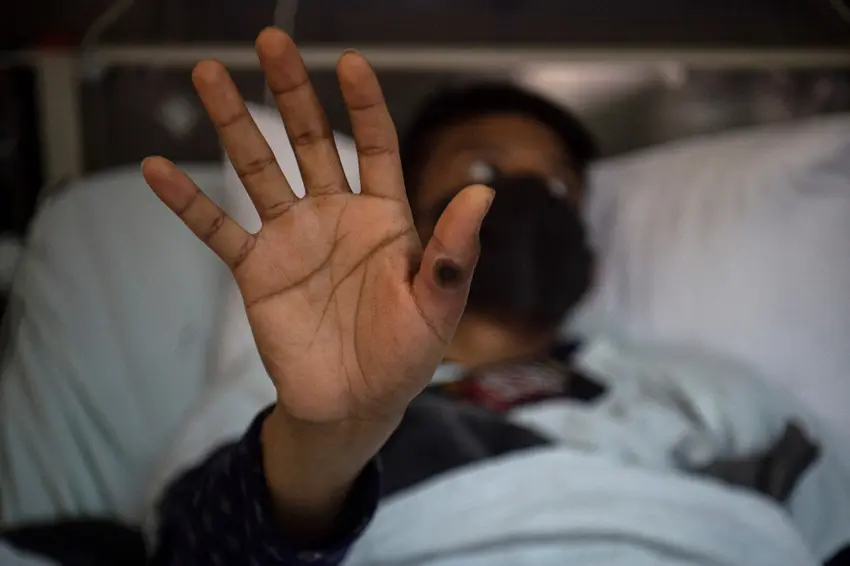
It causes fever, muscular aches and large boil-like skin lesions.
Comments