

When Mert Can Yilmaz and his wife Berrak Pinar Uluer Yilmaz applied for long-term residency in Sweden this summer, they were convinced they would be successful.
They met all the legal requirements and had been living in Sweden since 2017 – with permits that would qualify them for long-term residency status for the past five years.
“We moved here for our master’s programmes. I did my master’s in bilingualism at Stockholm University and my husband peace and conflict research at Uppsala. Sweden was our dream study location,” explains Berrak, holding the couple’s five-month-old baby.
After graduating, Mert was immediately offered work by his department, so he changed his permit to a researcher permit and then later to a work permit, with Berrak as his spouse.
Technically, they both already qualify for permanent residency as they have lived in Sweden for more than three years, but you can only apply for that once your current permit is due to expire, which theirs won’t do until February next year.
So, concerned about changing permit rules under the Swedish government’s “migration paradigm shift”, they started looking for other options to secure their status in Sweden in the meantime.
“I was in touch with my union and they suggested that we could apply for long-term residency status instead of permanent, so we did that in July,” says Mert.
Based on an EU directive, long-term resident is a status that may be granted to non-EU citizens who have lived in Sweden for five years (temporary visits and studies at a lower level than doctoral research is not included) – a status that has become more attractive following Sweden’s tightening of permanent residency rules in recent years.
Mert and Berrak fully expected the Migration Agency to approve their application. Mert had been working continuously for Uppsala University since 2019, with a permanent contract since 2021. Berrak is doing a PhD, speaks advanced Swedish and has held several jobs, including teaching and research, with her current residency being linked to her husband’s permit.
But instead the decision came back: rejected.
To understand the reason, we have to go back to 2022, when Mert and Berrak applied to renew their residence permits. As The Local has previously reported, the Migration Agency has radically improved its processing times this year, but before that, many non-EU foreigners faced waits of several months, and in extreme cases years, to renew their permits.
That meant that in early 2022, the couple’s permits expired before the extension had been granted. This is not unique, and during this period you’re still allowed to live and work in Sweden, although it leaves the applicant in limbo and makes international travel difficult.
Mert and Berrak fortunately only had to wait 25 days to receive their permit extensions.
But those 25 days are a big reason for why they were rejected for long-term residency.
“The Migration Agency notes that you didn’t have a residence permit during the period January 31st 2022 to February 24th 2022,” reads Mert’s rejection letter.
“The Migration Agency makes the assessment that you haven’t been staying in Sweden continuously for at least five years with a residence permit or on another basis as legally resident in the past five years. For that reason you don’t fulfil the basic requirement of residency to be granted a status as long-term resident in Sweden,” it concludes.
For Berrak, there’s an additional period between December 2019 and July 2020 when she was in-between permits, as she was changing from a job-seeker to a spouse permit. But during that period too, she had a pending permit application with the Migration Agency.
The couple say they submitted their applications on time on all occasions.
“I was working for Uppsala University during this period, so I was even a state employee during the gap,” says Mert. “So I mean, it’s funny that they say we’re not legal, that we don’t have the right to stay. Or maybe we have the right to stay, but this right doesn’t count as a legal stay. But when paying taxes it’s pretty legal. I’ve paid my taxes every year.”
For Mert and Berrak, it’s a setback but not the end of the world. The rejection letter makes it clear that their current temporary permits remain valid, so they’re not at risk of deportation, and their plan is still to apply for permanent residency in February.
READ ALSO:
But they hope to use their case to raise awareness of the red tape international talent still faces in Sweden, despite the government’s pledges to attract high-skilled workers.
“We shouldn’t be punished for the Migration Agency’s unreasonably long processing times,” says Mert, adding that the cycle of renewing permits and never really knowing when a decision will come is taking its toll, making them feel like their and their son’s future in Sweden is always up in the air. “It’s making us think of moving somewhere else in the world where they welcome really high-skilled workers.”
They have appealed the rejection of their long-term residency, but the chances of a successful appeal are slim. Ruling on a separate case in June 2024, the Migration Supreme Court found that a similar gap between permits was not to be regarded as legal residency and thus did not contribute to the qualifying period for long-term residency.
The court stated that “each member state has the authority to determine what it means to be legally resident in its territory. The Swedish system means that even if a foreigner is allowed to stay in Sweden while a residence permit application is under review, it does not automatically mean that the applicant is to be considered legally resident during that time”.
Mert and Berrak say that although they’ve been made to feel welcome in Sweden in many other ways, never-ending migration bureaucracy constantly reminds them they’re strangers.
“We wanted to contribute to this society, that’s why we’ve been living here continuously. But Sweden is not giving back,” says Berrak.
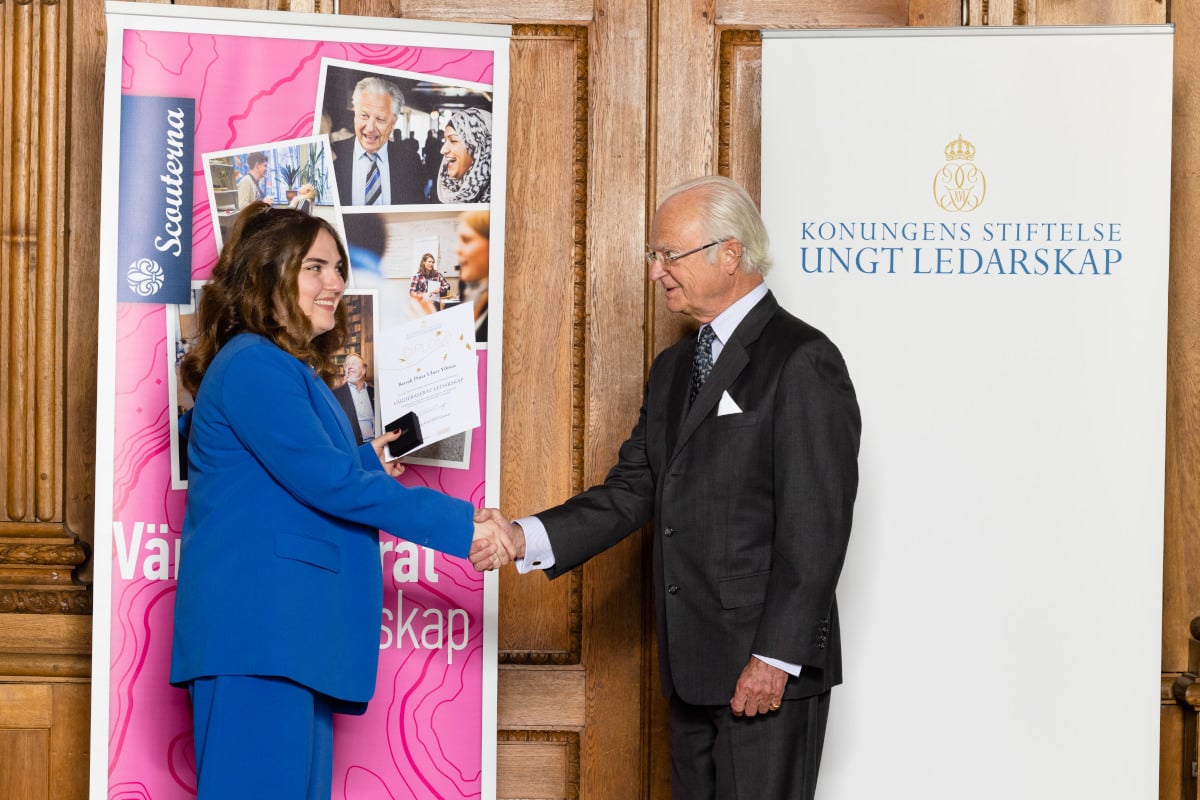
“I learned Swedish and worked in Swedish schools and then I even attended a young leadership programme and got my certificate from the King. I shook hands with him and we made small talk and everything. What is Sweden expecting from immigrants?”
Comments (5)