

Non-EU students who study at a Swedish university, for example for their master’s degree, may apply to stay in the country to job hunt for one year after graduating.
But many of them don’t actually receive a decision from the Migration Agency on their application until a significant chunk of the one-year period has already passed.
Nanda from Indonesia is one of them.
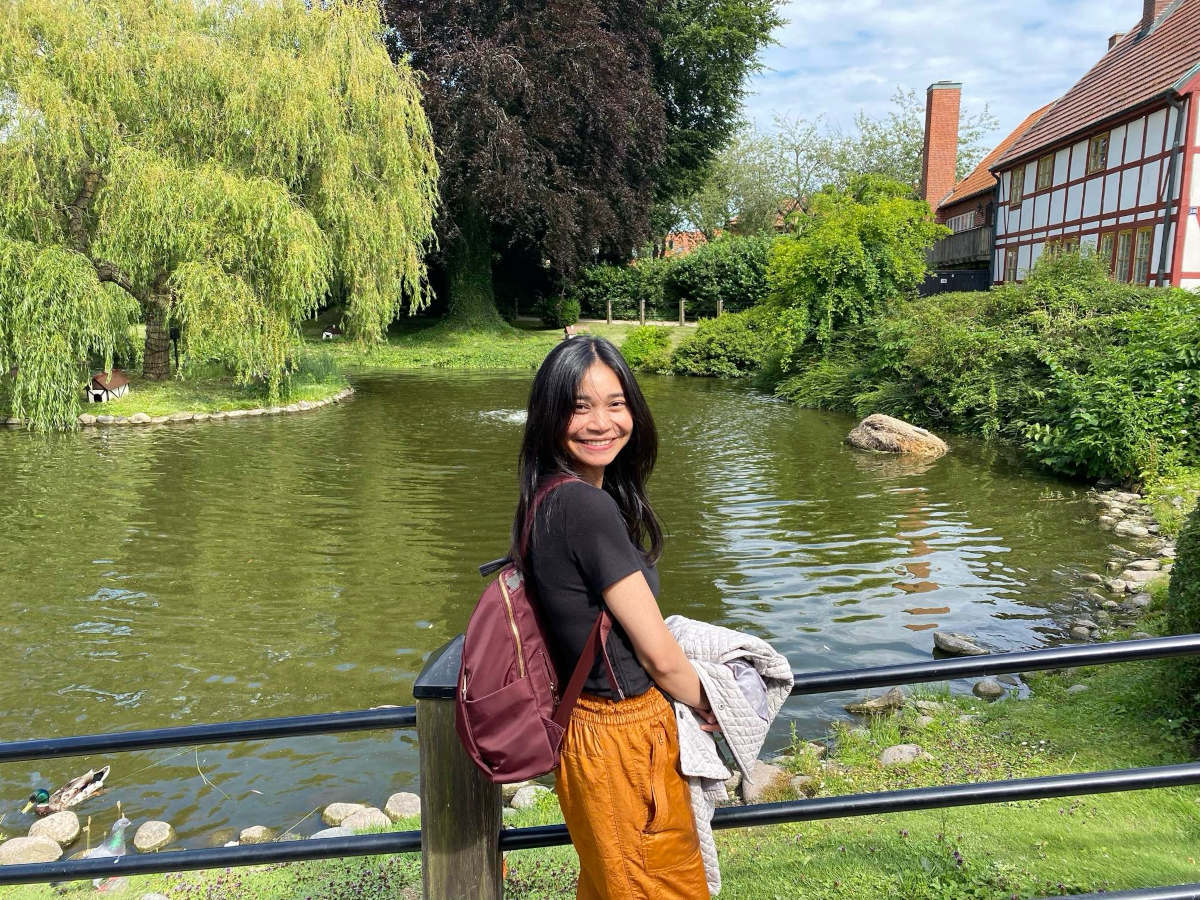
She received her master’s degree in business administration from Lund University last semester and has been waiting since early June for news on her permit application.
"I know I’m not alone, I just have to be patient. But at the same time I can’t help but wonder what could be the issue or how else I can help to speed up the process. I can’t really pinpoint what’s holding my application back," she told The Local.
The graduates are allowed to stay in Sweden while their permit is being processed, and may start applying for jobs in the meantime. But several say it is hard to cope with the uncertainty of not knowing whether or not you’re suddenly going to be told to leave the country at any moment, and they worry that employers are sceptical of their lack of a permit.
Many also complain of not being able to travel while their permit status is up in the air. Although they could go back to their home country and have the permit delivered to them there, they argue this would hamper their job hunt in Sweden and the EU in the meantime.
- Don’t miss any news about Swedish work permits by downloading The Local's app (available on Apple and Android) and then selecting Work Permits in your Notification options via the User button
They also cannot make short journeys abroad, not even to neighbouring countries such as Denmark, as they may not be allowed to return to Sweden until they’ve got a permit.
One reader who had waited four months for a decision, told The Local he would miss his graduation in Belgium as a result. He said: "My parents are travelling from India. It’s a once in a lifetime opportunity to attend your graduation but I am missing it. It’s really sad."
Didzis Melbiksis, a spokesperson for the Migration Agency, told The Local that the median waiting time for "job-seeking students" whose cases were concluded in 2021-2023 amounted to 225 days, or 157 days for the mean waiting time – in other words around five to seven months on average.
Those statistics include both successful and unsuccessful applications, as well as complete and incomplete applications. Incomplete applications usually take much longer to process.
"During peak season we prioritise first-time applications for student permits so that they can come here and study, which could affect processing times for applications of residence permits to look for work after studies," said Melbiksis.
Another problem is that many of the graduates can’t get a Swedish personal ID number until they have a permit. If you’re in Sweden for a year or less, for example if you studied for a one-year master’s degree as many did, you’re not eligible for a personal number.
This means they’re cut off from many aspects of Swedish life, healthcare is more expensive and less accessible, and the job hunt is complicated by the lack of a personal number. To participate in Jobbsprånget, for example, a popular internship for foreigners with a university degree, a digital banking ID is required which is only available to those with personal numbers.
"Not being registered makes me feel like I'm kind of here illegally. I have no identity here in Sweden because I don't have a personal number or BankID, so I carry my passport on me every day so people know that I'm here legally, just waiting for my permit," laughed Nanda.
Fátima, a single mother, came from Peru with her nine-year-old son to study a master’s in economics at Dalarna University, from which she graduated in the summer of 2023.
It took ten months for her to get her one-year post-studies permit application approved, meaning she had two months left in Sweden before it was due to expire. The one year starts either from the expiry date of your student permit or your graduation date, depending on which one comes last.
"I wasn’t going to be able to find a job in less than two months and I didn’t know what to do," said Fátima.
"I was like ‘should I go back to my country?’ Maybe I don’t have that many things in my house right now, but it’s not something that I can pack in the two suitcases I have. I would have to get rid of stuff. I was also thinking about my son. If we went back, he would have been in the middle of the school year, because it’s different there from here."
"I think if I were here alone I would have left a long time ago, but I make decisions for me and my son and Sweden is a very nice place for kids. He really likes it here."

To play for time, she instead applied for another residence permit to look for work in Sweden, which can be granted for between three and nine months. She might not be eligible for that, as you are supposed to apply from outside of Sweden and it doesn’t include family members, but she hopes that the case officer will take her situation into account and that she will be able to find a job to qualify for a work permit.
But both she and Nanda agree that finding a job isn’t as easy as they thought in a country that insists it wants to attract international talent. Fátima is currently working in a hotel to pay the bills, but it doesn’t pay enough to exceed the salary threshold required for work permits.
"It’s the kind of job that I can have, and it’s not the kind of job that’s enough when you apply for a work permit," she said. "I am an economist. I have seven years of work experience from my country and a master’s degree from Sweden. I am qualified to work in my field but it’s not easy to find something. And sometimes when I look for jobs they require you to already have a valid work permit."
Several of the readers who contacted The Local got a positive response on their permit applications while we were in the process of writing this article. And while some readers told us of friends of theirs who had given up and moved to other European countries, both Nanda and Fátima have decided they want to try to stick it out and continue building their careers in Sweden.
"I've been trying to spend my time here wisely, baking to relieve stress and practising for interviews. I apply for jobs every day and haven't got an interview. But strangely, one recruiter approached me from outside Sweden, so I was like 'is this a sign?' Is it not my destiny to stay in Sweden? But I very much want to stay. Feels like I spent one year for a master's degree here and it's a waste if I just leave," says Nanda.
"I've built my own community here, people that I go to and enjoy spending time together with. But I don't know. If I have to wait much longer and then opportunity comes from outside Sweden, then maybe that's where I should go."
For Fátima, there's at least one important thing she managed to do in those two months of her supposedly one-year permit: she got a personal number, which means she can finally enrol on a Swedish for Immigrants (SFI) course and improve her Swedish to boost her CV.
"After living here for two years and a little bit more, I finally got a place in SFI. I will start in two weeks," she said. "I know that everything takes time here, but I feel like I am working against the clock."

Comments (2)