
The bank announced in a press release on Thursday morning that it was cutting the rate to 2.75 percent from the 3.25 percent rate which has been in place since October 2nd, following the last rate announcement on September 25th. This is the first double cut to the key interest rate since 2014. It will begin to apply on November 13th.
In the release, the bank said that its decision to push through with a double cut did not preclude further 0.25 point cuts both in December and in the first half of 2025.
"If the inflation and economic outlook hold, the policy rate may continue to be lowered at the next monetary policy meeting in December and during the first half of 2025, in line with what was communicated in September," the bank said.
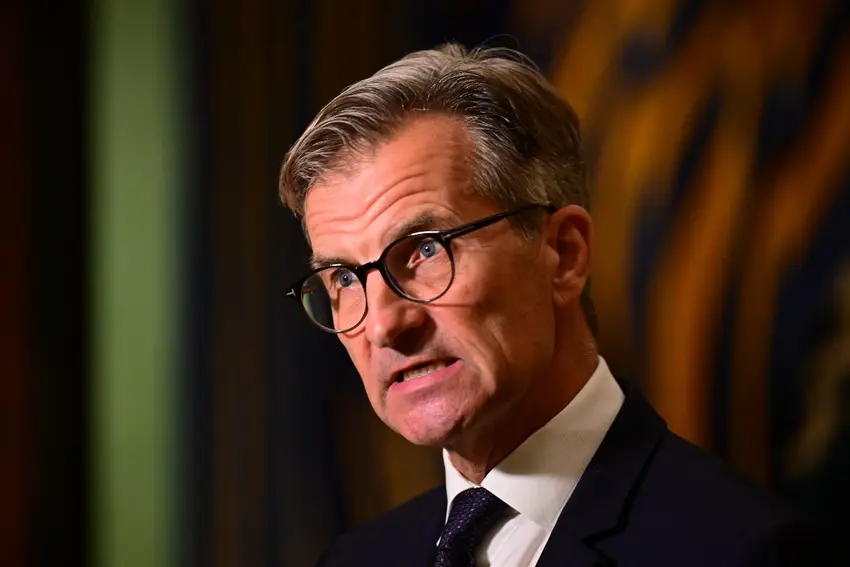
In a press conference following the announcement, Riksbank chief Erik Thedéen said that Donald Trump's win in the US presidential election may affect its decision whether or not to lower rates in the future.
"There are two things here, the first is barriers to trade which quickly and concretely could affect Swedish companies. That could also push inflation upwards," he said.
"The second is that the security situation in Europe could worsen. Naturally, I'm referring to Ukraine here. Obviously, that has human consequences, but could also have economic consequences."
He added that the US is on the cusp of major changes in economic policy, while admitting that it's too early to say exactly in detail what these changes could mean for Sweden.
READ ALSO: What does Donald Trump's election win mean for Sweden?
"The immediate effect is that inflation could rise. That has to be weighed up against the fact that the economy could end up moving more slowly, which would push down inflation. In any case, it would be unfortunate for a country like Sweden to end up in a trade war."
Swedish banks on Thursday predicted however that the bank would still lower the rate by 0.25 percentage points in December.
"We stick to our call that the Riksbank will cut by 25 points in December," Swedbank wrote in a post on X.
IN FIGURES: How could lower interest rates affect your Swedish mortgage?
Tobias Brännemo, chief economist for the Unionen umbrella union, said that the decision to make a double rate cut was an indication that the bank should have started cutting rates earlier.
"This was a good decision and the right decision, but it's also a sign that they started too late," he said. "Hopefully the business cycle will start to turn upwards in the near future."
The bank acknowledged that following a double cut with further cuts in December and next year would mean a more rapid and extensive reduction than it had flagged in September.
"Despite an expectation... of brighter times ahead, there are still few clear signs of a recovery. In order to provide additional support to the economy, the policy rate needs to be lowered a little faster," it said in the press release.
However, it said that it was still possible that it would have to adjust its policy approach to take into account unexpected events, saying there were risks around geopolitical unrest, other countries' economic policy decisions, the weak krona, and the state of the Swedish economy.
"Economic developments are currently difficult to assess," it explained, "not least after the American election".
The policy rate is the central bank’s main monetary policy tool. It decides which rates Swedish banks can deposit in and borrow money from the Riksbank, which in turn affects the banks’ own interest rates on savings, loans and mortgages.
If bank interest rates are high, it’s expensive to borrow money, which means people spend less and as a result inflation drops.
Three of Sweden's main mortgage-lending banks responded to the central bank's decision by cutting the rates on their three-month variable rate mortgages by 0.5 percentage points, with the SEB bank rate dropping to 4.74 percent and Handelsbanken's to 4.79 percent. Nordea also said it was cutting its rate by 0.5 percentage points but did not give a final rate.
Comments (1)