
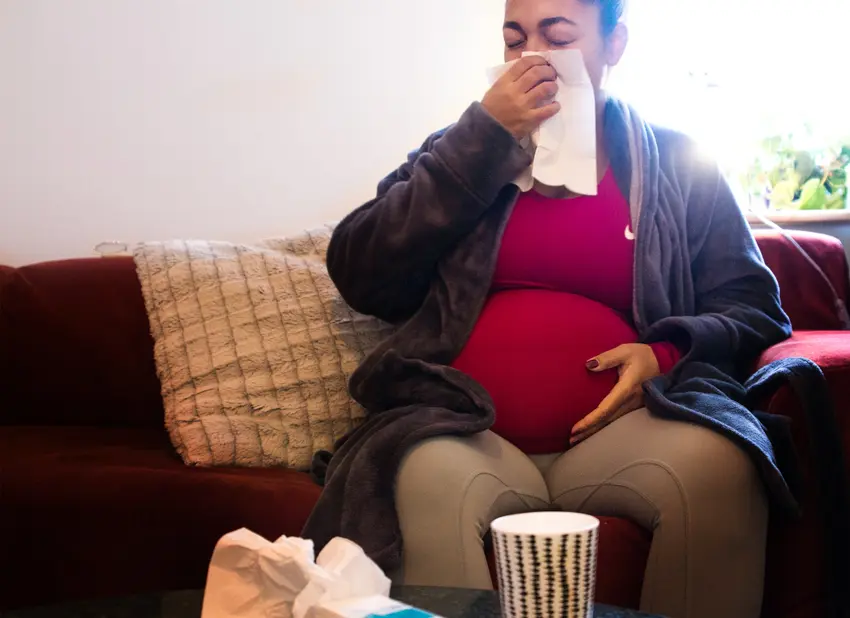
Last week, the number of confirmed influenza infections in Sweden doubled compared to the week before.
"Remember to show special consideration and avoid contact with people who risk serious illness if you have symptoms of a respiratory infection – even if you have mild symptoms," said Public Health Agency epidemiologist AnnaSara Carnahan in a statement.
The flu vaccine is recommended and offered for free in Sweden to people who belong to one of the following risk groups: If you’re aged 65 or older, if you’re pregnant (after week 12 of your pregnancy), or if you have an underlying health condition that puts you at higher risk of developing a serious infection.
If you do not belong to a risk group, it usually costs around 300-400 kronor depending on where in Sweden you live.
But influenza isn't the only virus going around at the moment.
The Public Health Agency warned a few weeks ago, as The Local reported at the time, that the norovirus season – or vinterkräksjukan as it's known in Swedish ("winter vomiting bug" – apparently Swedes like being literal about this sort of thing) – is also under way.
The viruses causing the illness, calicivirus, are highly contagious, but can be stopped by practising good hand hygiene (with soap – hand disinfectant is not enough). The illness exists throughout the year, but the number of cases usually increases between November and April.
If that wasn't enough, it's also the worst season in 26 years for mycoplasma infections.
Mycoplasma is an illness usually affecting the respiratory system, caused by the bacteria Mycoplasma pneumoniae.
It isn't generally dangerous and the symptoms are similar to those of a common cold: fever, sore throat, headache, fatigue, with the exception that it also usually defined by a persistent cough. In the US in particular it's sometimes referred to as "walking pneumonia", as it's less serious than standard cases of pneumonia ("walking" as in people who have it might still be up and about).
Most people have relatively mild symptoms – although a cough that sticks around for a few weeks is of course annoying – and recover without antibiotics or hospital care, but some may develop serious pneumonia.
Comments