
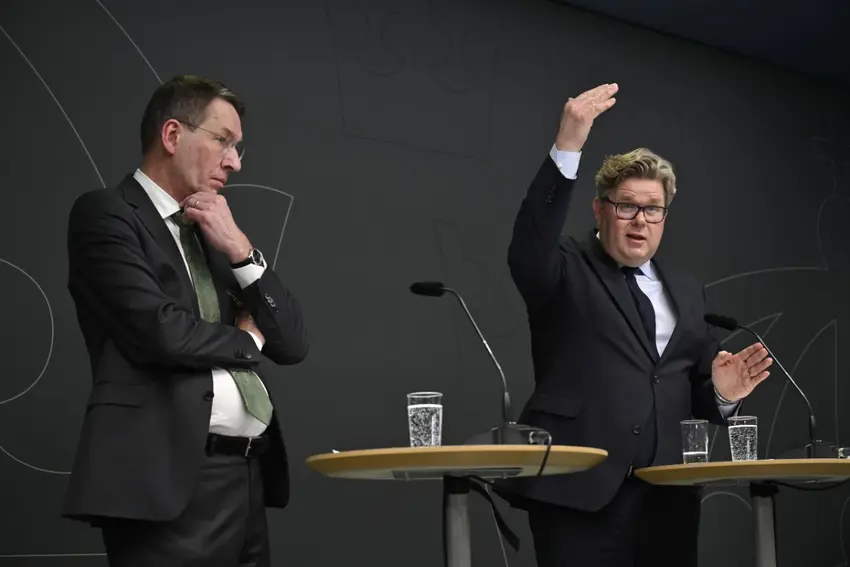
In its conclusions the cross-party Committee on Fundamental Rights and Freedoms proposed that under the constitution it should be possible to strip Swedish citizenship from dual citizens who commit "serious crimes which threaten national security or are covered by the jurisdiction of the International Criminal Court".
The serious crimes, the report read, would include crimes such as espionage, high treason, incitement to war, and rebellion.
The judge Henrik Jermsten, who chaired the cross-party Committee on Fundamental Rights and Freedoms, said that international law would have allowed the committee to go further and strip citizenship from dual citizens found guilty of any serious crime.
"There have been discussions over which categories of crime should be specified and the committee has settled on drawing the boundary at 'serious crimes which threaten national security'," he said.
Sweden's three government parties and the far-right Sweden Democrats, however, added a reservation to the conclusions explaining that they had wanted to go further and extend the possibility of revocation to other serious crimes such as gang crime.
"There is space to take back a citizenship if someone commits a very severe crime in a criminal network environment, and as I now understand the proposals from the committee, that space has not been fully used," Strömmer said in answer to a question from The Local's Paul O'Mahony.
He didn't confirm whether or not the government would attempt to include other serious crimes as grounds for revocation.
"To be very concrete: the top level of criminal networks sitting abroad directing murders, shootings and bombings in Sweden. I think that would be a natural step, but now we have the proposals, we have what has been possible to reach a majority around in the committee, so let's see what the process will lead us," he said.
The committee also recommended including a right to interrupt a pregnancy into the constitution and limiting Sweden's right to assembly to allow new laws making it illegal to be a member of a criminal gang.
Making changes to one of Sweden's four constitutional laws requires two separate majority votes in parliament, one on either side of a general election.
This means that for the changes the government wants to see to go through it will have to win the 2026 election and then win a second majority vote.
Comments