
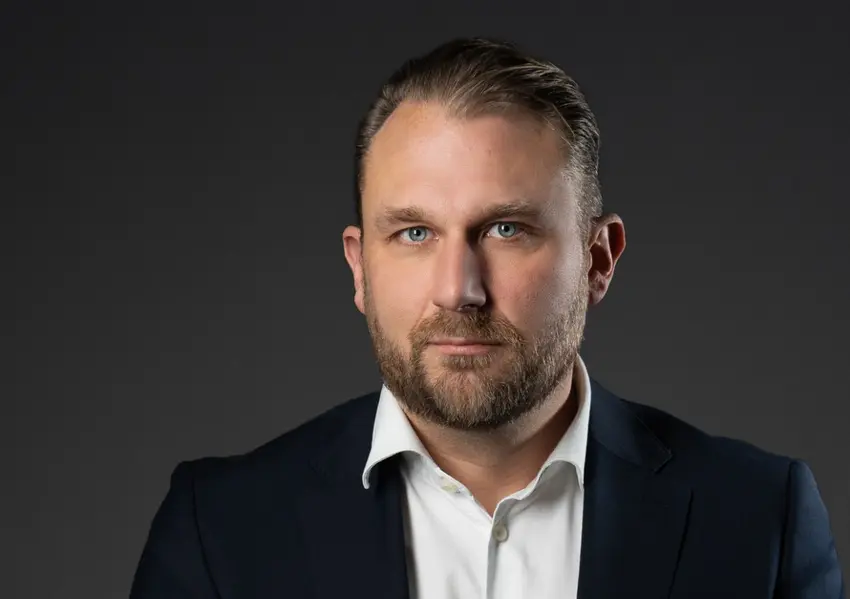
The centre, part of the Swedish National Council for Crime Prevention, is tasked with strengthening and developing preventive work against violent extremism in Sweden, with the aim of preventing ideologically motivated criminality and terrorism in the country.
Kindroth took on his role last November after 20 years as a police officer.
1. How well does what happened at Campus Risbergska fit the template of a school shooting, and how well does Rickard Andersson match the profile of a typical perpetrator?
It is still too early to comment on the suspected perpetrator's profile and motives. A serious crime has been committed at a school and the police have not completed their investigation, so we know nothing yet about the driving forces behind the act.
Research does indicate that there are some recurring factors regarding lone-acting individuals who commit school attacks. School attacks are often committed by students or former students of the school towards which the violence is directed. It has also been established that they have often experienced social exclusion, psychosocial difficulties, violence, crises, and trauma. Failing in studies or work is also a common factor, as is isolation and loneliness.
READ ALSO: What we know of the ten victims of the Örebro campus attack
2. To what extent was the school prepared, and from what you know, to what extent did the teachers and students follow the best practice on how to respond to a school attack?
What we know at present is that the school had rehearsed similar situations and that there were routines in place for how to act in a serious incident. CVE has not been in contact with Risbergska school before and has no insight into how they worked there.
CVE has previously cooperated with Örebro municipality. But the centre is not tasked with training for "ongoing deadly violence" or physical school safety. The Swedish Civil Contingencies Agency (MSB) is responsible for helping society prepare for major accidents and crises.
3. There are now proposals from the government to put more locks on schools, and also to allow teachers to search students' bags. How much do you think that these measures would reduce the risk of future shootings? What are the arguments against such measures?
They are probably not the solution to everything, but could be an important complement to any preventive work. Experience shows that school attacks are usually committed by people who have attended or are attending the school, so they may have access to the premises and knowledge of what the premises look like. But it makes sense to ensure that unauthorised persons do not have access to the school area.
READ ALSO: What do we know about the Örebro school attack?
4. What would you say are the most important measures schools, and the government, can take to reduce the risk of school attacks?
Preventive work begins long before a person even starts thinking along extremist lines or about harming others. Protective factors, such as success in school or at work, positive self-esteem, secure family relationships, close and stable relationships outside the family, and good role models, lower the risk of a person becoming radicalised.
We need to work on many fronts at the same time. Increasing physical security in schools is an important aspect, where it is necessary to ensure that schools have established routines for how to act if the worst happens. All schools should have a plan that describes how the school should prepare for, act during, and recover from an attack.
Each individual school should design its own plan based on its particular conditions. At the same time, we need to work broadly to strengthen mental health, especially among children and young people. It is welcome that the government recently launched a strategy and action plan for mental health and suicide prevention.
Research shows that lone actors often give signals in advance before a violent act. It is important to act if you suspect that someone in your vicinity is having thoughts about harming others. You can contact the police with your concerns. Professionals can contact CVE's support phone for advice.
5. Your predecessor at CVE led a major government inquiry into preventing exactly this sort of attack, most of the recommendations of have not yet been enacted. Do you think the measures recommended would have made any difference in this case?
It is still too early to speculate about what could have been done differently in this specific case. Lone actors who have isolated themselves from society are always difficult to detect.
The government decided to appoint an inquiry into school safety in July 2022. A year later, the inquiry proposed that CVE should be given a specific responsibility to provide support to actors who handle concerns about school attacks. The legislative proposal, which meant that we would have the opportunity to handle personal data, was decided in January 2025 and will come into force on March 1st this year. So far, the government has chosen to proceed with all the proposals that the inquiry has submitted.
One of the proposals, which is currently out for consultation, will change the rules on confidentiality so that municipal adult education centres can share information about an individual with the social services if they believe this could prevent crimes. On April 1st, a new law is also expected to come into force, which will mean that schools and other actors are obliged to provide information to law enforcement authorities.
6. How does CVE work with schools to try to identify students who present a risk, and what do you advise schools to do if they are worried about a particular student?
School staff and other professionals can contact CVE's support phone, which is open to all professionals on weekdays between 8am and 4pm. We offer free support throughout the country and have the opportunity to go out and help on site. We can of course also provide support in English.
The support is tailored to each situation and need. Often it consists of helping with collaboration so that all actors who need to be involved get the right information and work together in the best way.
This often concerns schools, social services, and the police, but can also mean psychiatry and people offering leisure activities. Our message is always to take your concerns seriously and to seek help from others.
Sometimes there is uncertainty about what information one can and should share, and then CVE can help you. If you are worried about an individual, you as a professional should report your concerns to the social services and cooperate with the police.
When it comes to school personnel, it is essential to work on protective factors. This means putting in place the necessary support to help students succeed in studies and relationships. There need to be adults at the school who, with open, curious questions, care, and empathy, can make contact with students they are worried about. It is also important to involve guardians so that everyone is working in the same direction.
CVE has produced written guidance that professionals in schools and social services can use, which is available in English.
Skolattack.se is a website developed together with the Swedish National Agency for Education, the National Board of Health and Welfare, SKR (Swedish Association of Local Authorities and Regions), the Police, and MSB about how school acts can be prevented.
Could Campus Risbergska realistically have identified Andersson as a risk when he studied briefly at the school in 2021? What could potentially have been done then?
We know too little about the suspected perpetrator to be able to answer what possible warning signs may have existed back in time.
Compared to other countries, how much of a problem does Sweden have with school attacks?
Sweden does not stand out internationally. The USA stands out, and in Europe, Germany and Finland have also suffered more attacks. There are no official statistics on the number of completed or averted school attacks in Sweden. If we include Örebro, there have been five school attacks in Sweden in the past ten years, three of which have had fatal outcomes.
This is not a Swedish problem. A number of international studies that have examined chats and various forums on the internet show that some individuals glorify and praise previous school attacks. They encourage others to carry out school attacks.
CVE has handled about a hundred cases concerning concerns about school attacks, and the police authority receives new tips every week. In many of the cases where CVE has provided support to professionals, the concern was initially high, but when the right actors collaborated, concern has decreased over time. Preventive work is difficult to measure, you can never know what would have happened if you had not acted. At the same time, we consider it likely that the preventive work that is carried out in Sweden plays a very important role.
We almost always receive cases at an early preventive stage. This shows that schools and municipalities to a large extent have knowledge and react in time.
The Center for Preventing Violent Extremism national support function can be reached at 08-527 44 290 between 8am and 4pm on weekdays. It is for professionals, mainly in municipalities and authorities at the local level, who need support in the preventive work against violent extremism.
Comments