
Cervical cancer is caused by the human papillomavirus (HPV), a sexually transmitted infection.
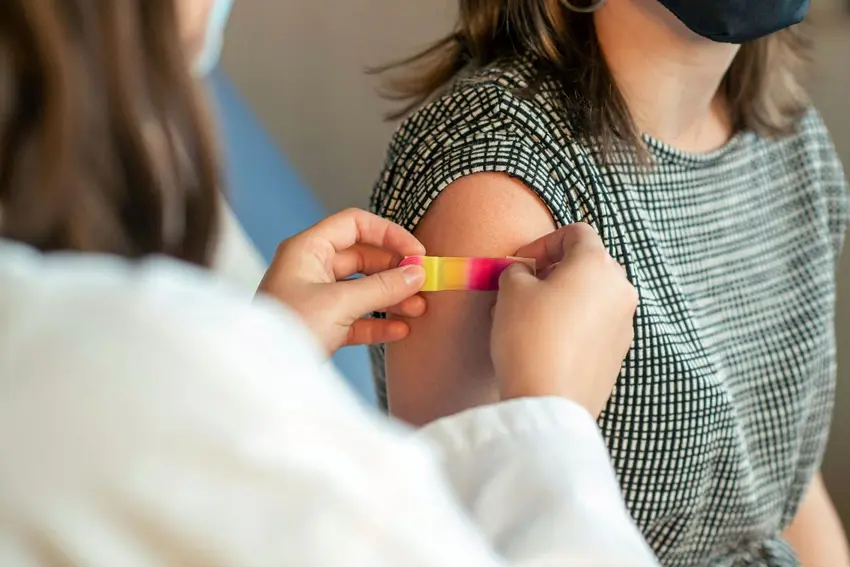
To achieve its goal of eradicating this type of cancer, the Swedish government has launched a targeted vaccination campaign, offering free HPV shots to women born between 1994 and 1999.
This initiative is a crucial step in the fight against cervical cancer, the third most common form of cancer among women aged 20 to 49.
Scientific advancements have made it possible to prevent the disease through vaccination, and if a sufficiently large portion of the population is immunised, cervical cancer can be eliminated entirely.
Sweden aims to achieve this milestone by 2027.
The eradication project
A nationwide initiative, known as the eradication project, is being conducted as a government-supported study.
The project involves all Swedish regions, which are seeking to vaccinate at least 70 percent of the target group.
Sweden launched two information campaigns to support these efforts: "Take the Shot Against HPV" in 2023-2024, followed by "Get the Free HPV Shot" in late 2024.
Women born between 1994 and 1999 were offered free vaccination with Gardasil9, which protects against nine HPV types. The long-term goal is to achieve herd immunity, stopping the virus from spreading altogether.
The campaign gained traction in 2024, with the government providing additional funds to help regions struggling to meet their vaccination targets.
In December 2024, the Regional Cancer Centres in Sweden (RCC) extended their support until June 2025.
By February 2025, vaccination rates varied across Sweden, with some regions surpassing the 70 percent target while others continued their efforts to increase participation.
Overcoming challenges
Despite Sweden's efforts, challenges remain in reaching the 70 percent vaccination target.
According to Joakim Dillner, professor of infectious disease epidemiology at the Center for Cervical Cancer Elimination at Karolinska Institute and Karolinska University Hospital, Sweden had achieved a national vaccination rate of 53.5 percent by February 2025.
"Most regions are well under way to 70 percent. Two regions with large populations may have problems reaching 70 percent by the end date of June 30th, 2025, but have recently increased the pace significantly. In small and medium-sized regions, it has been easier to achieve community engagement and large participation, but it is more difficult in large cities," Dillner told The Local.
To overcome these challenges, Sweden has implemented several strategies to maximise participation.
"(We're offering) high capacity and convenience. We currently offer vaccination with concomitant screening at 764 sites all over Sweden. Personalised invitations with modern technologies (mobile phone push notices) have been most effective and are now used extensively," Dillner explained.
A race against time
With only four months left before the free vaccination programme ends, experts warn that time is running out for those who have yet to receive the vaccine free of cost.
As of June 30th, 2025, those who have not been vaccinated will need to pay 6,000 kronor for the full HPV vaccine series, a cost that could be to steep for many.
"Our top priority is to urge people to get vaccinated now," Fanny Pontán, a registered nurse and expert on the HPV virus at the Swedish Cancer Society, told The Local.
The Swedish Cancer Society is working closely with regional health authorities to implement new initiatives and enhance communication strategies.
One of the most successful campaigns of 2024 involved a partnership with cinema chains.
"Last year, we had a successful collaboration with [cinema chain] Filmstaden and [health provider] Capio, where Filmstaden opened its movie theatres to offer the HPV vaccine in a familiar and accessible environment. Due to the success of this initiative, we will repeat the collaboration on International Women's Day, March 8th," Pontán said.
Regional vaccination statistics
So which regions are the closest to reaching the target?
Värmland and Kalmar had by February 2025 been among the most successful, with vaccination rates of 73.4 percent and 73.1 percent, respectively. Halland and Västerbotten also showed strong numbers, reaching 67.5 percent and 67.2 percent.
In contrast, larger metropolitan areas such as Stockholm-Gotland and Skåne lagged behind, with rates of 45.8 percent and 46.1 percent, respectively. These areas faced challenges in engaging the population, but efforts were ramped up with additional funding and strategic outreach.
Uppsala, Västra Götaland, and Östergötland fell within the mid-range, with vaccination rates hovering around 50-60 percent.
Several other regions, including Örebro (62.3 percent), Blekinge (64.4 percent), and Gävleborg (61.6 percent), were on track to reach the 70 percent target with continued efforts.
Meanwhile, Dalarna had one of the lowest rates at 48.7 percent.
As of February 2025, Skåne and Örebro had also begun offering the HPV vaccine to men up to the age of 26 to accelerate progress.
A model for other countries?
The success of Sweden's initiative has the potential to serve as a model for other countries, Dillner told The Local.
"Both HPV vaccines and HPV screening are very powerful tools for prevention. We aim to demonstrate that they can be given to large populations in a short time – using efforts in the campaign mode. Every year elapsing with the continued existence of this cancer is unnecessary and can be avoided," he said.
Sweden's campaign is not operating in isolation.
"The HPV community is largely built on international networks, and we are, for example, collaborating with Rwanda in a similar campaign," Dillner added.
Pontán, on the other hand, stressed that one of the key factors behind Sweden's relatively high vaccination rates is its school-based program, which simplifies participation.
"By lowering the thresholds for participation and including everyone, these programmes increase confidence among the target population and parents, leading to higher vaccination rates," she noted.
Additionally, the expert on the HPV virus at the Swedish Cancer Society said that Sweden's success has been driven by proactive catch-up vaccination, targeted outreach to hard-to-reach groups, and strategic collaborations between public and private entities.
"Each country's institutions and healthcare systems shape how vaccination efforts are carried out, which means that Sweden's model cannot be replicated exactly. Nonetheless, our hope is that Sweden's experience offers a valuable roadmap that can guide other countries in their effort," Pontán said.
Comments