Advertisement

INTERVIEW: 'We are working intensively to attract more high-skilled workers to Sweden'

Richard Orange
Richard Orange - richard.orange@thelocal.com
INTERVIEW: 'We are working intensively to attract more high-skilled workers to Sweden'
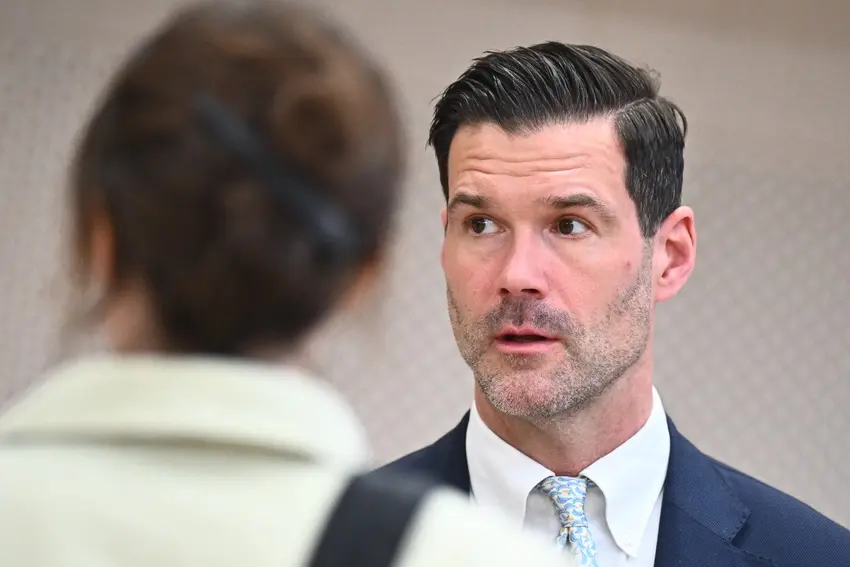
Sweden's migration minister, Johan Forssell, defended Sweden's record on attracting high-skill migrants. Photo: Claudio Bresciani/TT

Sweden's Migration Minister Johan Forssell has hit back at criticism that the government's moves to tighten citizenship requirements will deter high-skilled workers from coming to the country, claiming these workers are in fact taking a rising share of work permits.

Advertisement

"I am proud to say that we are working very intensively on attracting many more high-skilled tech people to Sweden," he told The Local, saying it was one of his department's priorities. 

He conceded, however, that in his meetings with high-skilled foreign workers and their employers, issues around citizenship did come up, but in his view it was one of a long list of obstacles. 

"I'm spending a lot of time meeting with the high-skilled segment of people. Some of them are addressing these issues, but I think the environment is more complex than that: it's also about the tax system, it's about the housing situation, finding schools, etc. So we will address this." 

He said that  statistics showed that the proportion of work permits which were given to high-skilled workers had increased between 2023 and 2024. 

"I'm pleased to see that the rate of high-skilled work permits last year compared to the low-skilled ones has increased. So there are obviously still some challenges ahead of us, but I think we're on the right path." 

According to the Migration Agency's statistics for 2023 and 2024, the number of work permits issued for jobs requiring a university-level or advanced university level education fell from 14,081 in 2023 to 11,278 in 2024, meaning close to 3,000 fewer high-skilled workers came to Sweden. 

As a proportion of total work permits awarded, however, the share high-skilled workers took of the total permits awarded rose from 68 percent to 84 percent.  

Advertisement

Forssell also hit back when The Local reported complaints from foreigners in Sweden that the stricter citizenship rules set to be voted on by parliament later this year would apply retroactively, because applications which have already been submitted will be judged on the new rules and not on the ones in place when the application was made. 

"We're not making any retroactive changes. That has never been the case," he said, arguing that the absence of transitional rules was "not the same thing as retroactive". 

The Local has contacted an expert in administrative law to receive a second opinion on how to define retroactive in this context and will update this article when they respond to us. 

Forssell defended the stricter citizenship rules by citing the similarly tough, or tougher rules, currently in place in other countries. 

"We want Swedish citizenship to mean something and it's a fact that if you compare the Swedish legislation with the legislation in other Nordic countries, or elsewhere in Europe, we are clearly lagging behind," he said. "In order to be very clear about that, if you are doing the wrong things, if you're committing crimes, for example, then you should not be in Sweden."

Interview by Paul O'Mahony, text by Richard Orange

More

Comments (23)

Join the conversation in our comments section below. Share your own views and experience and if you have a question or suggestion for our journalists then email us at news@thelocal.se.
Please keep comments civil, constructive and on topic – and make sure to read our terms of use before getting involved.

Please log in to leave a comment.

All comments 23
Sort by
Jack (the real jack)
I feel this government’s focus and actions point in one direction: minimizing immigration to Sweden. Claims about attracting highly skilled talent are diplomatic, fancy, and superficial—they mean nothing in practice.
Anonymus
Did Arbetsformedlingen's report highlight that citizenship increases employability rates? https://www.sverigesradio.se/artikel/new-citizenship-proposals-criticised-for-impact-on-integration-and-equality
still shocked
The new laws are for punishment. Most highly skilled workers are constantly learning & building new things for their work, that means they can not learn the language and other details at the same speed of a kid. At the same time until the citizenship one is not supposed to go out of Sweden more than 6 weeks, even if someone representing Sweden in EU projects for the government.. By pushing citizenship to 8 years they punishing all these people.
Anonymus
Where have we seen blindfolded officials speeding toward disaster, always choosing the wrong path? Isn’t that typical of non-democratic, third-world countries? From my experience living in several nations, this may be new to Swedes so they don't recognize how it is... But, here it is clearly: this very government has officials behaving the same way: making harmful decisions, blinded by their own agenda.
Anonymus
With the current geopolitical situation a smart government would incentive the forigen labour to settle. Countries sooner or later would be forced to manufacture and develop their products instead of importing them, the EU will do. If you're smart you would be taking the opportunity not doing the same. It is not smart to force people who are here for 2 years for example, to leave and settle in another EU country (e.g. Germany) maybe work for same company to get it's citizenship even before.

See Also