
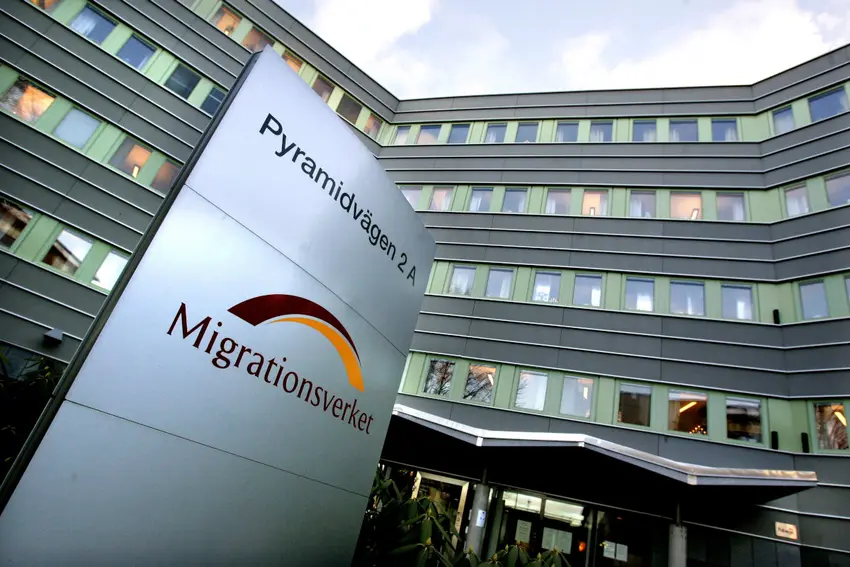
As The Local was first to report, the government-imposed security checks have left the Migration Agency unable to approve standard citizenship applications for over a month.
The sticking point is that the agency hasn’t yet fully set up its routines to be able to carry out in-person identification checks required of applicants as of the start of April.
But Mats Rosenqvist, section head for the Migration Agency, told The Local that everything is ready in practical terms and his team is just awaiting the go-ahead.
As soon as the director general has signed a formal directive – the details of which are still being ironed out – they’ll be able to get things up and running in a matter of days.
The directive is necessary to give the Migration Agency the legal right to ask applicants to come to one of their offices in person to show their ID – and to give the agency the power to, for example, reject the application of a person who fails to show up.
There’s no exact date available, but it is expected to be finished and signed soon.
“As soon as we get a directive, we can basically press the button and start opening up time slots at seven of our offices around the country,” said Rosenqvist.
SWEDEN'S CITIZENSHIP FREEZE:
The in-person identification checks will be one of the final stages of the processing of an application, and at first, everyone will have to do it without any exceptions.
It was initially reported that certain nationalities with biometric passports would be exempt and would instead be able to confirm their identity digitally via the Freja app, but the technological solution for that isn’t yet in place, Rosenqvist confirmed.
He could not say when those exemptions might be rolled out.
This is despite Migration Minister Johan Forssell telling The Local in January that people who have come to Sweden on a work permit or who from stable countries without security risks need not worry that their applications will be further delayed.
In October 2024, the agency predicted that it would conclude 87,000 applications each year in 2025 and 2026, thanks to increased staff at the agency – a first step towards reducing the heavily criticised long waiting times for Swedish citizenship.
But the new security checks forced the agency in April to lower its previous estimate by more than a quarter: to 64,000 concluded citizenship cases in 2025 and 65,000 in 2026.
Only six so-called “naturalisation cases” were approved in April – down from 3,234 in March. These are the standard kinds of cases which make up by far the majority and are in other words the ones you think of when you think of citizenship applications.
A total of 1,120 citizenship through notification cases (an easier route available to mainly children and Nordic citizens) were approved in April, as well as 65 applications for retaining one’s citizenship (for example Swedes born abroad) and 57 so-called citizenship declarations (for people who don’t know whether or not they are citizens), which are all categories that aren’t affected by the new security checks.
Comments (3)