
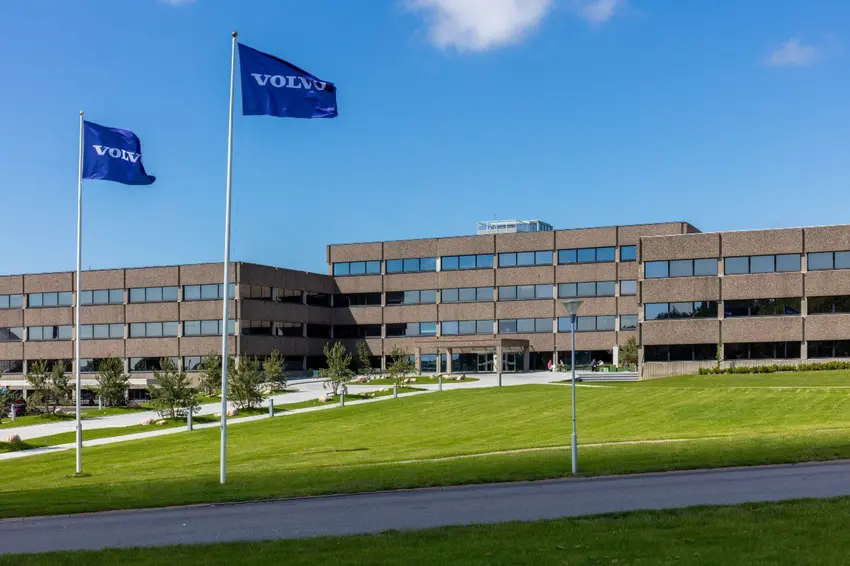
The Swedish car giant's handling of the case has been called into question after the victims spoke out about their experiences.
It emerged that an initial complaint of sexual harassment from one of the women was not followed up by Volvo bosses, due to the fact it was filed anonymously by a male colleague.
The company only decided to launch an internal investigation into the behaviour of the manager, who also has a foreign background, after the woman, named Arti*, had joined with two other victims, Veda* and Rani*, to submit a combined complaint.
This time the three women, all of Indian ethnicity, agreed to be named, lodging their complaint in May 2024.
After holding a meeting to hear their complaints, however, the company then delayed concluding its investigation for almost four months, keeping the manager in his role at the company's main factory complex in Torslanda, outside Gothenburg.
Then in October that year, bosses at Volvo moved the manager to another high-ranking position, opting not to terminate his contract. This was despite the company telling The Local that it operates a zero tolerance approach towards sexual harassment.
Unsolicited kisses, gropings
In her initial email to the company, Veda reported that the manager had grabbed her inappropriately by the waist during a team night out,
Arti reported that the manager groped her buttocks as he passed her in an office corridor, whilst the third complainant, Rani, said that he had forced a kiss on her, also during an after-work gathering.
"I started crying”, Arti said, when recounting her experience to The Local. “I started self-doubting, asking myself why that was happening to me, if I had done something wrong”.
“All these women are of Indian ethnicity and each new victim is younger than the previous woman," she wrote. "They were unwilling to come forward. This is very familiar to me, because we come from a social background where women are discouraged from speaking up and... judged for putting themselves in situations where their safety is compromised."
As well as the women's accounts, seven other employees who worked closely with the manager in Gothenburg told The Local, on condition of remaining anonymous, that he often crossed professional and ethical boundaries.
“He would make sexually inappropriate jokes, make people feel uncomfortable”, one senior male employee said.
Another male employee said: "A female colleague would pass by and he would say, ‘I could easily take her somewhere alone and fuck her’."
'It was a way of getting rid of one of the victims'
Whilst Volvo Cars’ Labour Affairs division (the company's HR department) declined to investigate the initial anonymous report filed on behalf of Arti by a male colleague, they responded quickly when Veda lodged the joint complaint.
“What you describe should be investigated on the basis of the Discrimination Act and work environment legislation, [and] it goes against the company's ethical positions”, read the response, seen by The Local.
Employees from the Labour Affairs office then interviewed the three women individually, leading them to expect a quick resolution.
Instead, the case was delayed for months and the manager ‒ who was made aware of the case against him ‒ took action to terminate Arti's contract.
“It was a way of getting rid of one of the victims”, said a senior employee who worked in the manager’s team at the time. “There was a real need for her. We were short-staffed in her area, it did not make sense to remove her”.
Volvo bosses later reversed the manager's decision and reinstated Arti's contract, although she later left the company.
'Not even a slap on the wrist'
On October 1st, months after the initial complaints were lodged, the company's Labour Affairs division held individual meetings with the three women, where Arti and Rani were informed that their complaints of sexual harassment had been upheld. Veda was informed that in her case they judged the manager’s behaviour had remained within acceptable boundaries.
Then, on October 17th, 2024, the victims were shocked to learn that the accused manager had a new role.
A department manager at Volvo Cars sent an email to over 50 employees announcing that the manager had been moved to a new position, taking over from an employee on parental leave. In the email, he even asked for the team to “make life easy for [him] when taking on his new challenge!”.
“It was not even a slap on the wrist, to be honest”, Veda said. “He got to keep the same respect. It was maybe a more important role”.
The three women, who have all since left Volvo, were not provided with a written record of the conclusion of Volvo's internal investigation by the Labour Affairs department.
Veda, however, took notes of her meetings with Labour Affairs staff and then shared them with those present to make sure they all agreed on what had been said.
In her account, she describes being told that the manager had violated the company's Code of Conduct, the Work Environment Act and the Discrimination Act. Her notes say she was also informed that Volvo had a five-level system for the types of action it could take in cases of proven sexual harassment. These ranged from a talk with the employee, a formal verbal warning, an official written warning, redeployment, and finally dismissal.
She described being told that "in this particular case... a redeployment was decided."
While no one in Labour Affairs team contested Veda's account of the meetings, in an email reply they said they could not confirm the details of the conclusion of the investigation.
"Due to the confidential nature of any investigation, findings and actions must remain confidential and cannot be shared,” read the email she was sent.
Even if the redeployment could be seen as some sort of sanction, Veda said she was dissatisfied with Volvo Cars' handling of the complaint.
“They need to be serious about these things. They're hiring people from different countries, people from different backgrounds that come to Sweden," she told The Local. "Volvo Cars has to take action”.
The cases of the three Indian woman are not the first incidents of harassment at Volvo that have made headlines in Sweden.
In 2023, reporting by Dagens Industri cited employees at Volvo Cars describing a culture of discrimination and sexual harassment at a factory in Skövde, as well as silence from the company’s management.
One expert on sexual harassment in the work place was critical of Volvo when told of how the company handled the case.
Karmini Sharma, an assistant professor at Imperial College London, stressed she was not aware of the details of the accusations, but described the decision to keep the manager in his role for months before the investigation was concluded as “mind boggling.”
"It seems so dystopian”, she said. “It cannot be that we go off for summer and deal with it later. What happens to the victims in between? They are going through mental trauma, they may have to interact with this person again."
'Volvo has zero tolerance'
When contacted by The Local, the manager accused of sexual harassment declined to comment.
In a written reply to The Local, Volvo said: “Volvo Cars has zero tolerance for all forms of discrimination and harassment. We work proactively to create a work environment and culture where respect and inclusion are a natural part of everyday life and take violations extremely seriously”.
The company declined, however, to comment on why it had taken so long to conclude its investigation, why the manager was allowed to discontinue Arti’s contract despite a clear conflict of interest, nor would it confirm what, if any, sanction he had received.
Volvo said: "Among other things, we regularly inform our employees and managers about their rights and responsibilities to contribute to a good and professional working environment, as well as how to report any violations, as these should be reported as soon as possible."
"There are several ways and tools for employees to report incidents in their own name or anonymously. All reports are treated confidentially, and employees who report harassment, bullying or discrimination are protected under Volvo Cars' anti-retaliation policy."
"Reports of sexual harassment are taken very seriously. When a violation is reported, we look into it promptly and determine whether an internal investigation is required. Internal investigations are conducted in accordance with applicable labour law and result in appropriate actions in accordance with and within the limits of Swedish labour law."
"Investigations are confidential, we do not comment externally on individual cases. Only those who need to know the information are given access to it."
*These are not the real names of the victims. They have been changed to protect their identity
If you are a victim of sexual assault or gender-based violence or suspect that someone else may be a victim, below is a list of available resources you can turn to if needed.
-
Kvinnofridslinjen. Call 116 016, service 24 hours a day.
Sweden’s national women’s helpline provides support to anyone who has been subjected to physical, psychological or sexual violence. Calls are free, and you can remain anonymous.
-
Kvinno- och tjejjouren Ada. Call for free.
A non-profit organization in Gothenburg that works to provide support and protection to women, girls and children who are victims of violence. They can help you in your contact with authorities and give you information about your rights as a victim of a crime.
-
Tillsammans. Call, email, or meet in person free of charge.
A national non-profit organization that specializes in knowledge about sexism, sexual harassment and sexual violence. With them you can have group support from people with similar experiences, or get individual support from a counselor.
Comments (2)