
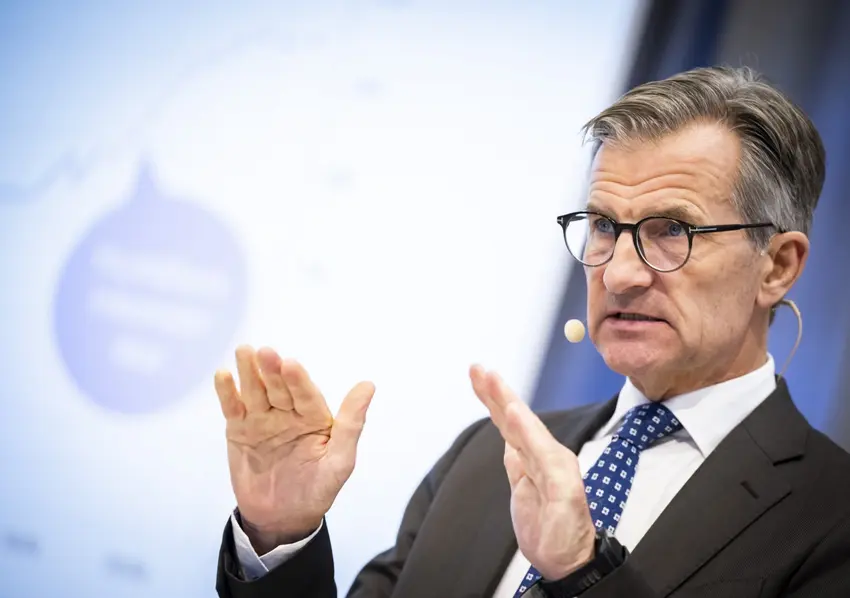
"This is the end of the cuts," Riksbank head Erik Thedéen said after the announcement. "That's what we predict. But there's a lot of uncertainty around that."
He added that the economy needs "a little push" to get going.
"Lower interest rates will give the economy further support," he told a press conference.
The decision to cut rates, he said, is due to the fact that pricing plans in retail and the service sector have been dampened, as well as the fact that the krona has strengthened against the dollar and inflation is expected to remain stable.
"Another reason is that demand is weak," he added.
The policy rate is the central bank’s main monetary policy tool. It decides which rates Swedish banks can deposit in and borrow money from the Riksbank, which in turn affects the banks’ own interest rates on savings, loans and mortgages.
If bank interest rates are high, it’s expensive to borrow money, which means people spend less and as a result inflation drops.
Does this mean inflation will rise?
Torbjörn Isaksson, head analyst at Nordea, pointed out the fact that there is a small probability of an interest rate hike in the Riksbank's forecast in the third quarter of next year.
"A lot can happen between now and then, so it shouldn't be seen as a strong signal," he said.
The 0.25 percentage point cut means that rates have now fallen by 2.25 percent since 2023, where they reached a 4 percent peak. However, they are unlikely to be cut further.
Thedéen said that uncertainty around tariffs and geopolitics, as well as fiscal policy ‒ such as the government's announcement to halve VAT on food ‒ all affect inflation forecasts and make them less predictable.
"The joker in our forecast is how much households continue to save," he added. "We think we will get a fairly decent increase in consumption and GDP next year of just under three percent. That's our best assessment."
Comments