

The NORMO 2025 report by the Nordic Council of Ministers has shown that 56 percent of adults and around 20 percent of children in the Nordic region are overweight or obese. Icelanders were most likely to be obese or overweight (70 percent of adults), while Danes and Swedes saw the lowest figures (47 and 51 percent). Almost one in five children in the Nordic region is overweight or obese.
Between 2014 and 2024, the number of overweight or obese individuals rose in most countries, but in Iceland, Finland and Sweden in particular.
“We are on a path towards becoming a sedentary and overweight Nordic population characterised by spending excessive time behind our screens while eating unhealthy and unsustainable food,” Karen Ellemann, the Secretary-General of the Nordic Council of Ministers wrote in the report.
She described the statistics on food as “worrying”, warning that the 2025 edition of the report “makes for grim reading”.
More red meat and less fruit and veg
The report shows that people living in the Nordic countries eat more red meat and sugary products than ten years ago, while also eating less fruit, vegetables and wholegrain products, despite recommendations encouraging them to eat more.
In addition to this, young people in particular are increasingly consuming energy drinks and other caffeinated beverages which the report warns can cause issues like mental health conditions, sleep disorders and difficulty concentrating.
Sisse Fagt, senior adviser at Technical University of Denmark, who led the work on the report, told the TT newswire that drop in consumption of fruit and vegetables surprised her, and that merely telling people what to eat does not appear to be sufficient.
"It needs to be easier to make healthy choices, maybe that could be something like changing the tax rate on different products," she said.
Heléne Enghardt Barbieri, Sweden's representative among those leading the study, agreed.
"If you're waiting for a train then sweets are the easiest thing to get hold of, not fruit. We need to see measures taken by government authorities, the food industry and the rest of society," she added.
Were there any differences between the Nordic countries?
Yes – although in general none of them ate in line with the Nordic Nutrition Recommendations.
The Nordic Nutrition Recommendations were most recently updated in 2023, advising a predominantly plant-based diet “rich in vegetables, fruits, berries, pulses, potatoes and whole grains, ample amounts of fish and nuts, moderate intake of low-fat dairy products, limited intake of red meat and poultry, and minimal intake of processed meat, alcohol, and processed foods containing high amounts of added fats, salt and sugar”.
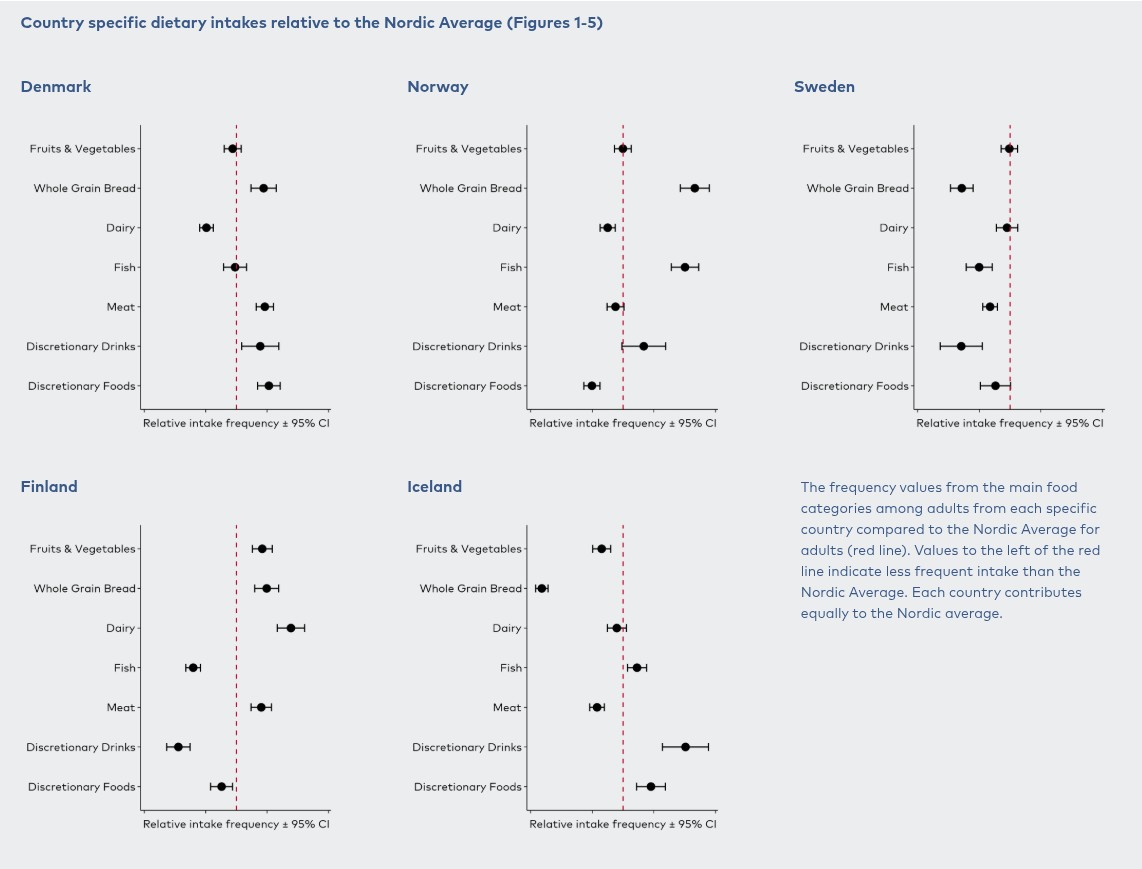
The consumption of fruit and vegetables was low overall, although among adults, Finns ate the most of the five Nordic countries. When it comes to children, Swedes and Finns ate the most fruit and veg.
Consumption of pulses and whole grains was also very low across the board – Norwegians ate the most wholegrain bread while Swedes ate the least. Fish consumption was also generally low, with Norway and Iceland eating more than the other three countries.
When it came to meat, Danes and Finns ate more than Norwegians, Swedes and Icelanders, while Finns consumed the most dairy and Danes consumed the least. Danes and Icelanders consumed the most so-called “discretionary” foods and drinks, defined as food and drinks not essential for nutrition, which are often high in added sugar, saturated fat, salt, or alcohol.
There were also some other demographic differences – women ate fruit, vegetables and sugary foods than men, while men ate more meat and wholegrain bread.
People with a higher education were more likely to eat a diet closer to the Nordic recommendations, while children whose parents were more highly educated were also likely to eat more fruit, vegetables and pulses and fewer sugary drinks.
See figure below for in-depth results for each country.
What about alcohol and smoking?
Alcohol consumption in the Nordic countries remained stable between 2014 and 2024, although there were some national differences. Denmark consumed the most alcohol and the highest rate of binge drinking, while Iceland and Finland consumed the least.
Norway and Sweden were in the middle of the pack – they have seen the amount of binge drinking decrease in the past ten years, but the report warns that “hazardous drinking still occurs” in both countries.
When it comes to smoking, daily use of cigarettes declined between 2010 and 2024 from about 16 percent to about 10 percent, but nicotine exposure overall remained stable as the use of traditional snus and so-called white snus (tobacco-free nicotine pouches) also rose during that period.
Around one in four Nordic adults uses a nicotine product daily, the report said, although usage has shifted from smoked to smokeless products in the past ten years.
Screen time and physical activity
People in the Nordic countries are also increasingly sedentary, with one quarter to one third of adults and around half of children not meeting physical activity recommendations. Screen time (not including screen time as a result of work or schooling) is also high among adults and children.
Adults across all Nordic countries reported an average of 5 to 5.6 hours a week on moderate to vigorous physical activity, with the figure highest in Denmark and Norway and lowest in Sweden, Finland and Iceland.
Sweden had the highest proportion of adults not meeting physical activity recommendations – 30 percent – while Denmark had the lowest at 24 percent.
Adults spent nearly four hours a day on recreational screen time. Iceland had the lowest figures of high screen time (defined as four or more hours a day), while Norwegians had the highest.
Comments (2)