
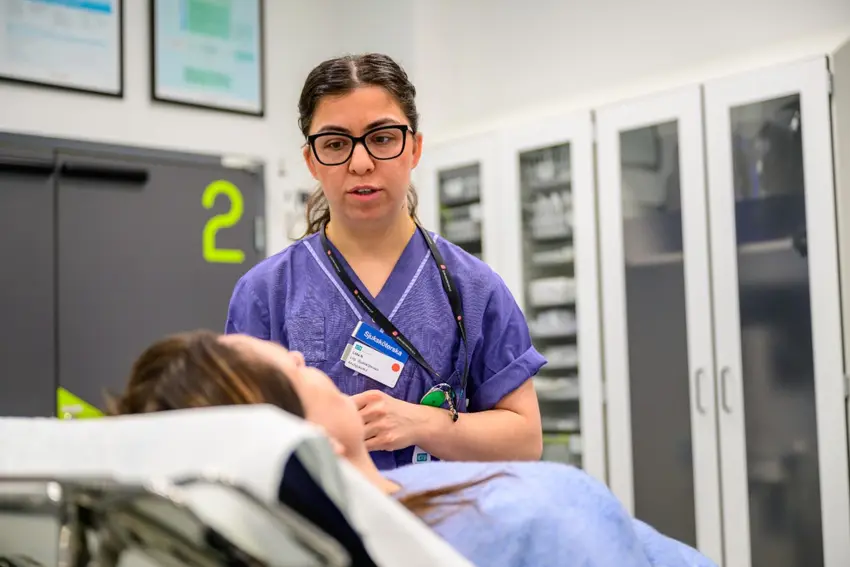
According to the report, 300,000 of Sweden's municipal and regional employees were born outside of Sweden, with 22 percent of municipal employees coming from another country in 2024, compared to 13 percent in 2014.
More than half (53 percent) of all vårdbiträden, a role which can be translated as care assistant, nursing assistant or orderly, are immigrants, as are 37 percent of undersköterskor (assistant nurses), 46 percent of dentists and 37 percent of specialist doctors.
The number of people of working age, defined as between 20 and 66, also rose by 500,000 over the past ten years, with many of those immigrants.
"The increase was made up of people born outside Sweden," Bodil Umegård, head of SALAR's data and analysis department. "If you just look at those born in Sweden then there was no increase."
In Sweden, regional governments are responsible for managing healthcare and regional transport, while municipalities are responsible for providing care for the elderly, running schools, and running municipal transport.
READ ALSO: How new Swedish migration rules could affect foreign residents in 2026
Sweden's government imposed new salary threshold on permits for people coming to work in Sweden in November 2023, setting it at 80 percent of the median wage. A further reform is set to raise the salary threshold to 90 percent of the median wage, or 33,390 kronor, from June 2026.
Umegård warned that Sweden's more restrictive migration policies risked making it more difficult for regional governments and municipalities to find the staff they need.
"The fact is that there will be far fewer people from other countries coming to Sweden in the future, which means that it can also be more difficult to recruit people to welfare jobs," she added.
Comments (2)