
When The Local reported in May that the Migration Agency had only managed to approve six citizenship applications in the entire month of April, the news was ignored by the Swedish media. The hiking of the salary threshold for a work permit in November 2023, also went largely unreported.
It was only from the autumn, when the decision to abolish the spårbyte, or track change, law in April 2025 began to result in people's colleagues, children's friends, and neighbours being ordered to leave, that the issue began to shoot up the agenda.
The ground had been prepared protests led by Fereshteh Javani and others, which were reported mainly in local media.
But the real breakthrough came in November, when the case of Sara Ghorbani and Farhood Masoudi, an Iranian Christian couple in Norsjö, Västerbotten and Sam, a Syrian assistant nurse at an old people's home in Nyköping, brought the impact of the abolition of the Spårbyte law and the hike in the work permit threshold to national attention.
Strikingly, these cases mobilised liberal members of the ruling Moderate Party, which has driven through the changes that have led to these deportations, with Douglas Thor, the leader of the party's youth wing, and Håkan Jansson, group leader for the Moderates in Norsjö municipality in northern Sweden, both calling for the laws to be adjusted, and Thor even debating Migration Minister Johan Forssell about it on TV.
By the time doctors and nurses from Södersjukhuset in Stockholm came out to protest in support of Zahra Kazemipour and Afshad Joubeh, on December 23rd the impact of the track change abolition had become front page news.
The result has been that all the voices who had been strangely quiet over the past few years are now coming out into the open.
How tone deaf can the government be?" asked Susanne Nyström, leader writer for the Dagens Nyheter newspaper when Migration Minister Johan Forssell held a press conference to boast about slashing migration.
Migration would indeed be an issue in the election campaign, she predicted, but not in the way the government parties expect: "It's time to ask a simple question to the Moderates, Liberals and Christian Democrats: 'Is it really their policy to expel large numbers of integrated and hard-working people - and throw their children into insecurity?'"
"The situation today exhibits clear shortcomings in predictability and proportionality," argued Karin Gyllenring, the lawyer who founded the Asylbyrån law firm in an article in Svenska Dagbladet, calling for an amnesty for those who have jobs and are integrated in Sweden, even if they used the track change rule to get their initial work permit.
"People who have followed the current rules, worked and integrated in Sweden are now being deported due to the transition rules that were omitted when the track change law was abolished," she wrote.
Even union bosses and those responsible for employing immigrant workers, such as senior doctors, weighed in.
"The Swedish labour market would not function for a day without people who were born abroad; the welfare we are all used to would not function for a day without their skills," declared Teresa Svanström, chair of the Swedish Confederation of Professional Employees, in a debate article in Expressen.
"I wonder why, Johan Forssell? Why should people who followed the law and did exactly as they were instructed be retroactively punished with expulsion?" asked Stephan Serenius, consultant doctor at Södersjukhuset in Expressen.
"You say that the media rarely mentions that the track change law had been abused and led to cheating, that the system that the coalition government itself introduced had become “broken”. But when you are going to fix a system, is there any reason to retroactively punish those who have nevertheless followed all the laws and regulations that applied?"
As a result, the government parties, which had been preparing to go into the election campaign boasting about their hard-line immigration policies and success in slashing immigration numbers now find themselves on the back foot.
Forssell has over the past month been going out of his way to express empathy for those affected.
"I understand that individual decisions can arouse emotions," he said in an interview with Aftonbladet before Christmas.
He developed the line in an opinion piece in the same paper: "Of course, I see that there are people who have worked and done the right thing for themselves and I take their situation into consideration. But there is also another perspective that is less often mentioned in the debate, namely that this is a system that was criticised for several years by various authorities for cheating and abuse."
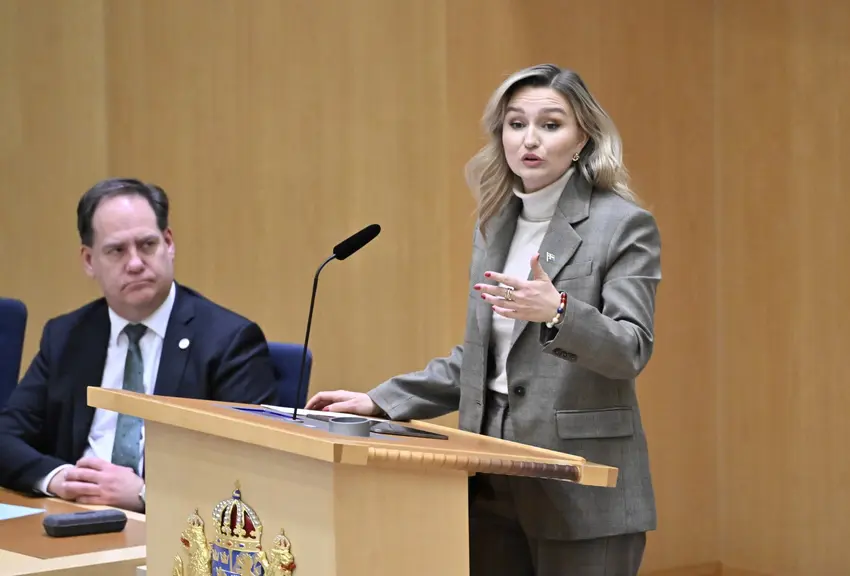
By the time the parliament held its first debate of the year on Wednesday, there were growing signs of a government retreat, with even Deputy Prime Minister Ebba Busch, the politician who has dragged her Christian Democrat party far to the right on immigration, opening up for adjusting the laws.
"If it is the case that we have, in the nuances, missed the mark here ‒ even though the basic intentions were right ‒ then we on the Christian Democrats' side are prepared to review the legislation to ensure it applies more accurately," she said.
"These are, after all, people who have come here, made Sweden their own, share our Swedish values, share the Swedish language, and have also done everything possible to enter the Swedish labour market. It is clear that the starting point should be that they can stay."
If the protests continue and the media keeps covering deportations, it is starting to look like the government might back down.
Comments (2)