
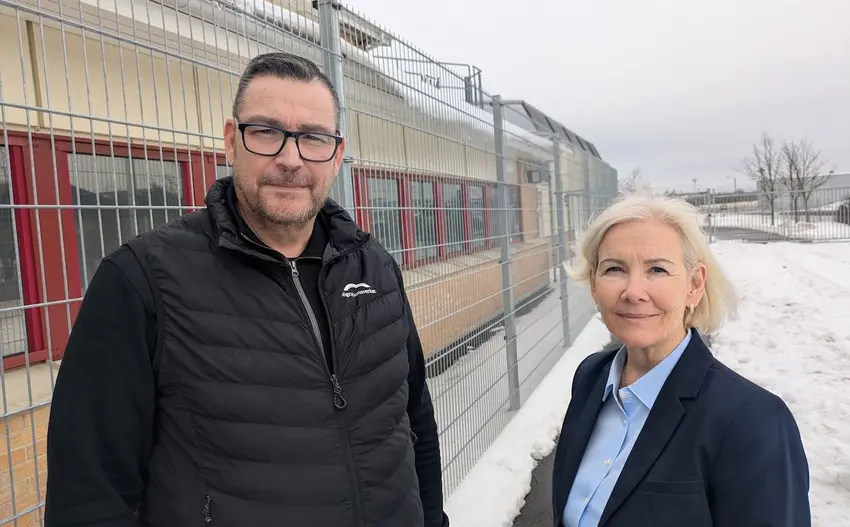
A prison service van pulls up outside as we come up to a rotating security door at the Migration Agency's detention facility at Åstorp, southern Sweden.
"We shouldn't be here right now," says Maria Lindgren, the section chief in charge of the facility, tugging gently on my arm, as I glimpse officers outside preparing to haul in the next detainee.
As I hang back in the hope of witnessing the operation she becomes insistent. "Someone is coming here, right now, so I have to request for you to follow me."
Lindgren speaks refined Scanian Swedish and spent a decade in Brussels working for Vinge, a law firm. She makes for an unlikely prison chief. That may be because, strictly speaking, she isn't one.
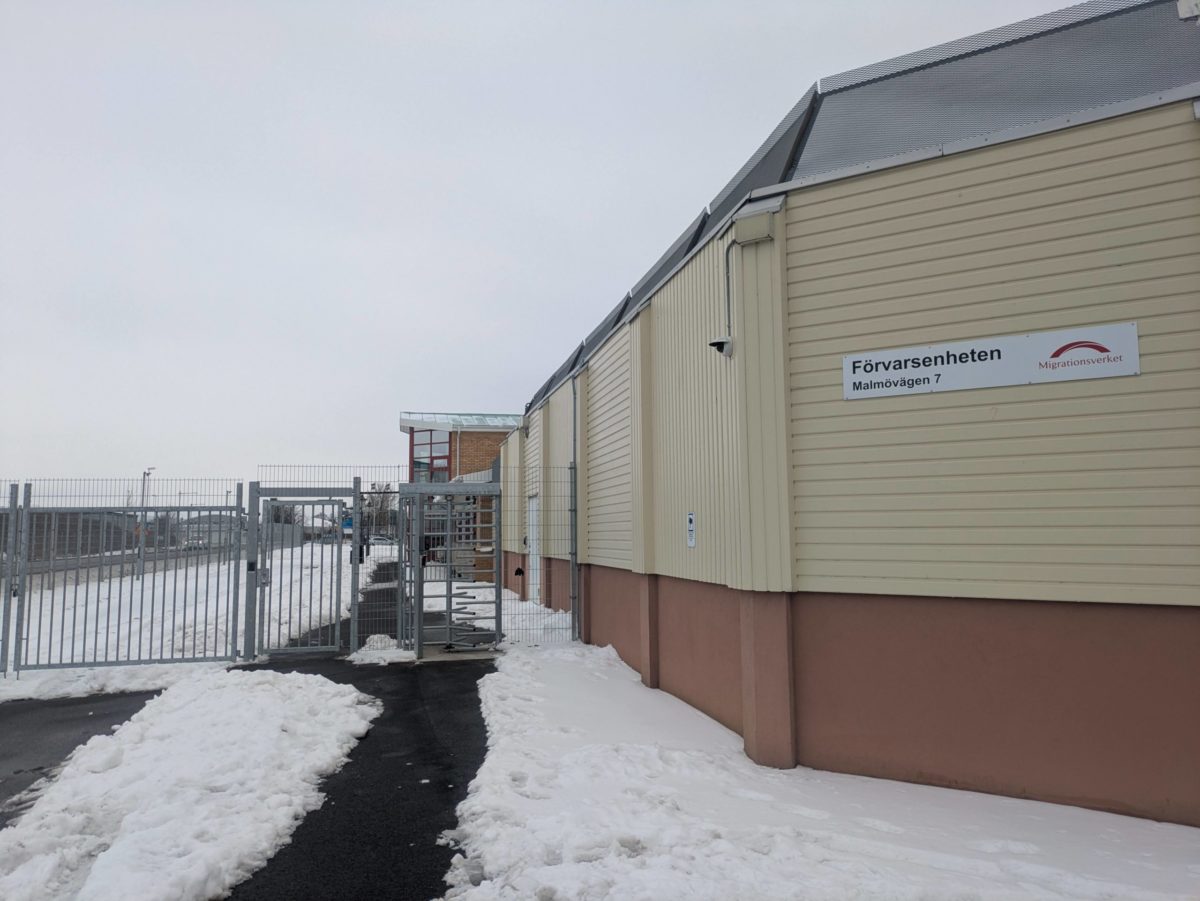
Åstorp, as she repeatedly tells me, is not a prison. The facility is regulated under Sweden's Immigration Act rather than the Detention Act. Residents wear their own clothes; they are not locked in their rooms, told when to sleep, or ordered to follow a fixed daily schedule.
And yet, three former detainees told The Local last year, it often feels like one.
The new arrival, bundled through the door moments after I'm out of the corridor, will have been woken by police bashing on their door early that morning, cuffed and escorted to a prisoner transport van. Once they enter the building, they most likely won't leave until they're on their way to Copenhagen Airport. For some this happens within days, for some months, but an unfortunate few end up stuck here for more than a year.
The three detainees complained of overcrowding, substandard food, poor ventilation, and inadequate treatment for mental health issues. Staff incident reports obtained by The Local paint a similar picture, with staff reporting being punched, kicked and spat on by detainees and one officer witnessing a colleague screaming "fuck you" at a detainee. There were reports of detainees pledging to kill members of staff's family, threatening sexual violence, and vowing to return and plant bombs on the premises. In November, a woman was found standing on a chair with string around her neck in an attempted hanging.
So The Local wanted to see the facility for ourselves.
Lindgren concedes that there are frequent challenges: "It is a complex operation and it is a difficult and important job because so many different things happen every day."
For some who have experience of prison, she agrees Åstorp can be harder to cope with, as prison life is more structured and detainees know how long they will be there.
When The Local visits at 11am on a snowy day in February, however, the atmosphere is nothing like what you would expect from the incident reports. The corridors, common room, computer room and gym are calm, clean, and eerily quiet. A handful of detainees, who The Local was not allowed to interview, shuffle around bleary-eyed in tracksuit bottoms.
"It should be open," Lindgren says of the atmosphere she hopes to create, waving her arms around a common room which is under renovation. "It should feel a bit like you're at an asylum reception centre – only you cannot go outside the perimeter."
When asked about the absence of detainees, the day's activity leader, Marianne, explains that they are mostly still asleep. "They're sleepy heads. There's no bedtime, like in a prison, and a lot of them are young people who like to stay awake at night."
When they do wake up, she will arrange activities for them like watercolour painting, making bead bracelets, bingo, chess and table tennis tournaments. In a report last year, the Justice Ombudsman, which is responsible for regulating detentions centres, complained the activities provided were "often of poor quality".
Leif Benrabah, the team leader on duty, says that staff also play cards and converse with detainees.
"That's the big difference with the prison service," he says. "Here we chat to them. You play a lot of cards at night, which is also a way to help those who can't sleep, who maybe have anxiety. You give them something else to think about."
Those who have come here directly from prison after being sentenced by a court to deportation are treated the same as anyone else, he insists, as their stay at Åstorp is not considered an extension of their sentence. "Your punishment has been served."
Lindgren shows me a standard room. There are two metal bunk beds, two wardrobes, and two small lockable cupboards. It is institutional and cramped and there is only one small window that cannot be opened, but it is clean and in good condition.
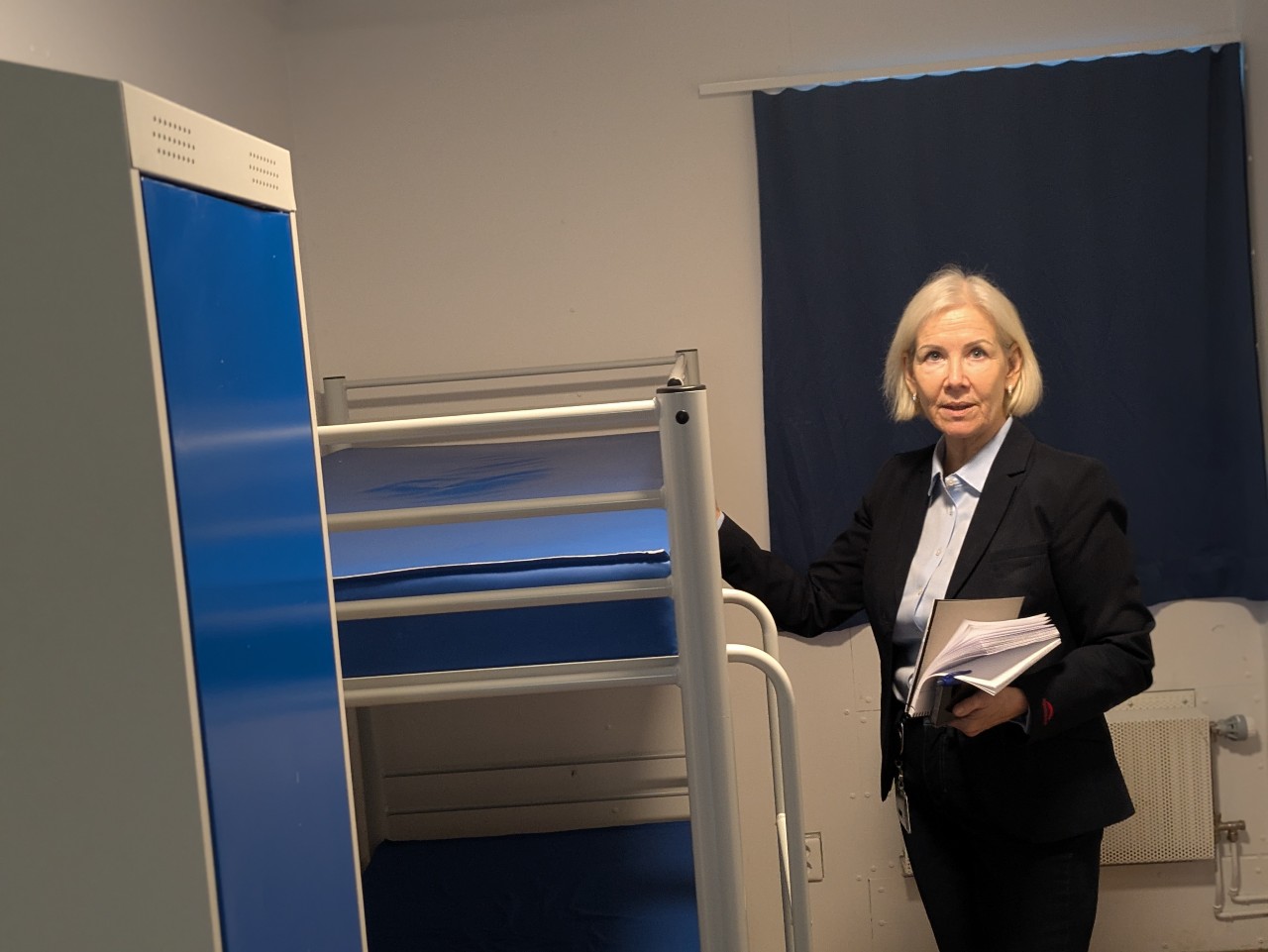
Next, she shows me a freshly renovated shower room similar to what you might find in a well-kept youth hostel. This, she argues, counteracts another recent criticism from the Justice Ombudsman, that the bathrooms are in poor condition.
'You have demonstrated that you are not willing to cooperate'
Upstairs in the staff cafeteria, I meet a handful of case officers from the Migration Agency's returns department in Malmö, chatting over a cup of coffee.
"This is the absolute last thing we do," one of them tells me. "We really don't want to stick people in detention. We focus first on voluntary returns. But in some situations we have to, unfortunately. These people have a deportation decision. They have to leave Sweden."
In theory, none of the detainees I see chatting in the common room or sitting in the computer room are being punished. Instead, they are being kept available, on the orders of the returns team I speak to, so they can be easily removed from Sweden when an agreement is reached with their home country or they decide to go voluntarily.
Lindgren contests the argument – made by all three former residents The Local spoke to – that people here are deprived of their liberty despite doing no wrong. Everyone, she maintains, has been given a lawyer and had the opportunity to appeal their rejection two or more times. Despite this, they have ignored a court ruling and either gone into hiding or refused to cooperate.
"Even if you have not done anything criminal, you have still chosen not to abide by the decisions taken by our authorities," she says. "You have demonstrated – often for many, many years – that you are not willing to cooperate."
Detainees can be difficult to manage, Lindgren admits.
"Something happens to a person when they get deprived of their freedom. When you end up in a situation where you can't open the door and go out, you can't go out and go shopping, you can't visit who you want, of course it does something."
DETAINED IN SWEDEN:
- Swedish migration detention centre 'a prison in every way'
- 'Let him starve': Internal reports reveal issues at Swedish migrant detention centres
She sees the repeated protests about the food quality, which have led to riots at some of the other detention centres managed by the Migration Agency, as one such "typical" reaction to being detained.
"In an environment where you can control very few things, food is one of the things you can complain about."
She says the Migration Agency in southern Sweden uses the same catering contractor for its detention centres as it does for its accommodation for asylum seekers. The same contractor, she claims, also provides food for local elderly care homes.
Benrabah, who himself spent a decade running a popular harbour-side restaurant in nearby Helsingborg, admits that food quality varies, but argues it would for any supplier be hard to meet the tastes of 80 people from so many varied backgrounds. "Everyone wants the spices and flavours that they're used to. We have the whole world's food preferences," he says.
Lindgren's says the complaints about medical treatment are no different from the complaints all Swedes have about their local primary care centre. "They want to have a lot of painkillers, a lot of psychotropic drugs," Lindgren says. "And just like I do if I don't get want from a primary care centre, if they don't get what they want, they think they're getting poor healthcare."
Detainees can inform the nurse of any medical complaints by dropping a note into a letterbox. The nurse, who is employed by the regional health authority in Skåne, then judges what treatment is appropriate.
When it comes to complaints about poor ventilation, however, Lindgren admits that this has been an issue, blaming the large windows in the common room area which were intended to make the facility less claustrophobic, but in the hottest summer weeks, turn it into a greenhouse.
"The air quality can be poor and and people do get angry about this, but it's not like we don't meet the requirements for running a facility. It's not like people are getting sick."
'They can't tell you the truth'
When sent an account of The Local's visit, two former detainees say that the true conditions at the facility have been hidden.
"The toilets sometimes have problems and are blocked for days and the smell can kill you!" says Mohamed Ould Alioune, who spent nine months at Åstorp before being deported to Mauritania. The facility was never adequately cleaned, he claims, complaining that he had "never seen a place more disgusting".
As for medical treatment, he complains that the nurse always suspected detainees of faking illness and that he had ended up being hospitalised for pancreatic problems due to diabetes.
The other detainee, who wanted to be anonymous, complains of "repeated abrupt interruptions" of a psychiatric medication that he had been taking, leading to a severe withdrawal which left him with "paralysis, slurred speech, cognitive impairment, and a near inability to speak coherently".
He dismisses Lindgren's claim that healthcare in detention was comparable to a normal primary care centre, arguing that as the centre is a "closed, state-controlled environment", the duty of care should be "correspondingly higher".
What he reacts most strongly against, though, is Lindgren's assertion that everyone held at Åstorp has refused to cooperate. On the day he was seized, he claims, the border police who smashed down his door ignored his repeated insistence that he had an upcoming appointment with the removal unit, had agreed to meet the police, and had an ongoing court case. They then gave a false account of what had happened.
"If the arrest account is exaggerated, incomplete, or false, then the downstream detention review is contaminated from the beginning," he argues.
The opportunity to meet people from other cultures
After four years in the job, Benrabah rejects the picture given in the incident reports of a stressful, barely functioning operation.
"No day is like another, and if you're sociable, it's a fantastic job. You have the opportunity to meet people from other cultures. It's a great workplace and I'm very proud of the work we do here."
The Justice Ombudsman reported last year that the Migration Agency was struggling to recruit quality staff and to then train them up adequately.
"If the prison service is expanding in a big way, or a big new SIS hem [a home for youth with behavioural issues] is being built somewhere which is recruiting a huge number of staff, then we end up fighting over the same people," Lindgren agrees, saying she had had a particularly difficult period last summer.
For the last six months or so, the facility has been adequately staffed, she adds. Staff get two weeks of basic training, which is then supplemented by a process of continual education, with training programmes in various techniques in handling and de-escalating conflicts, and training for specialist roles such as transportation, incident leader and team leader.
One of the strengths of the centre, Benrabah believes, is that many staff members themselves have immigrant backgrounds, meaning they "know the social codes and understand the languages" of detainees. There is, he adds, zero tolerance of racist language, either between staff, between staff and detainees, or between detainees – a complaint made in some of the incident reports The Local has seen.
"If we ever hear about it, and I know this because we've had it several times, we managers handle it with serious conversations and similar measures."
When detainees use racist language to insult one another, staff talk to them about it. But Benrabah says it is rare for violence and fighting to break out.
"We work proactively and are very close to the detainees. We speak to them every day, so we keep an eye on those who are feeling bad."
If it does happen, staff can place detainees in isolation rooms, sometimes only for a couple of hours, sometimes for much longer. Under Sweden's Immigration Act, staff are required to review this decision "at least every third day".
'The question is not what label the building has'
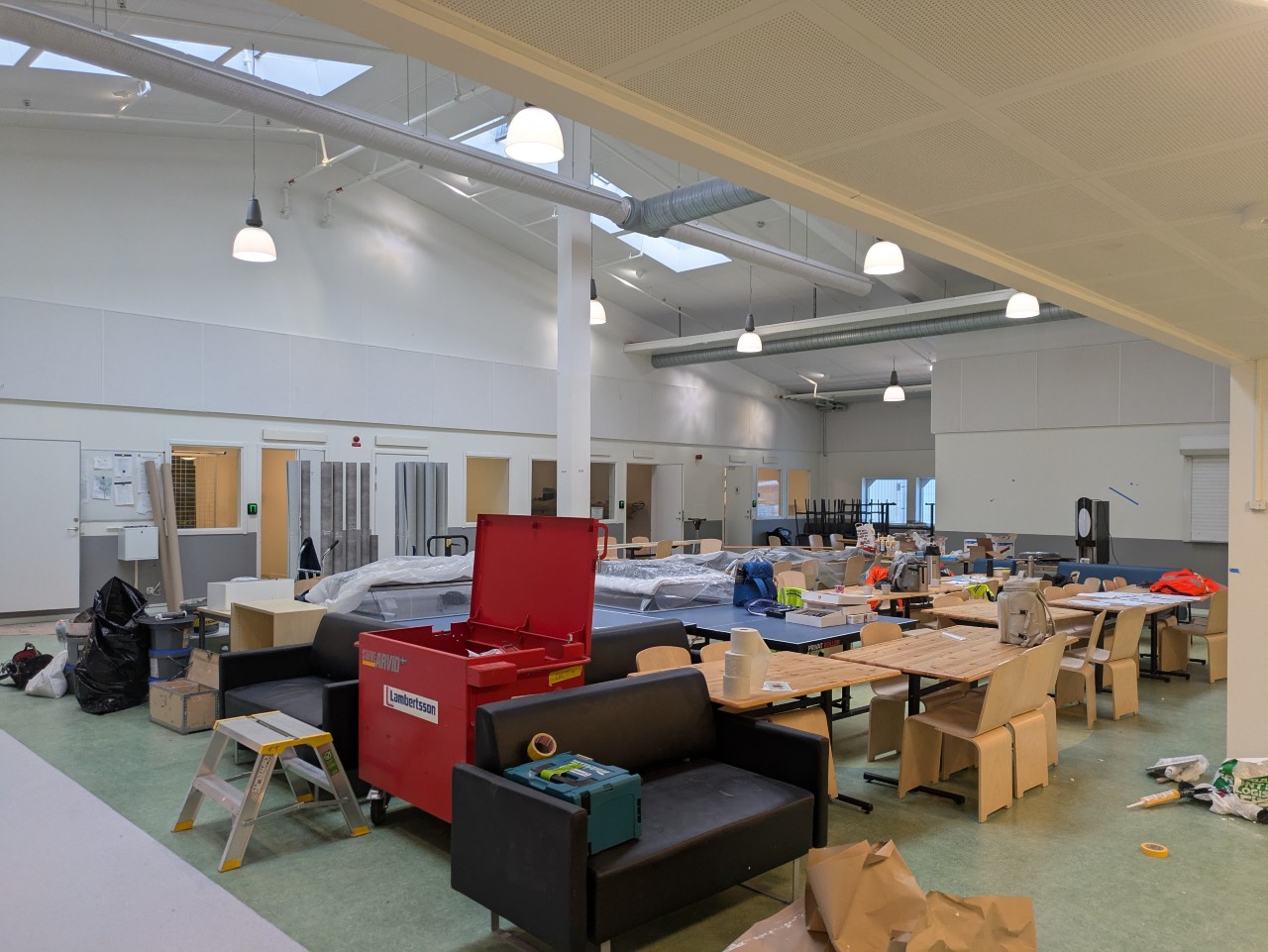
One reason for the quiet when I visit is that half of the facility is closed for renovation, with table tennis tables, sofas and dining tables piled unused in the middle of one of the two large common rooms. Soon, work will begin on construction of a new building with space to hold a hundred additional detainees, which Lindgren says will be purpose-built.
By 2029 the number of people held at Åstorp will more than double as part of the government's plan to increase the number of people detained after losing their residency rights in Sweden from 500 to 1000.
The government also plans to allow detention centres to be more intrusive, giving staff greater powers to carry out strip searches, and searches of detainees' rooms and property.
"We know that criminals and people who pose a threat to Sweden can hide in the shadow society. An effective and legally secure detention facility helps to counteract the shadow society and maintain regulated immigration, so that a 'no' means you have to leave Sweden," Migration Minister Johan Forssell said announcing the increase.
The detainee The Local spoke to says that in his view Åstorp is already more intrusive than a prison. "Intrusive measures could be imposed immediately," he complains, with no chance of appeal until after the event.
The most important requirement for detention centres, and one he argues Åstorp does not meet, is that there are sufficient safeguards in place and that they are respected. That is why he has trouble with Lindgren's repeated assertion that Åstorp is not a prison.
"That may be formally true, but it is not sufficient," he said. "Once the state deprives a person of liberty, the question is not what label the building has."
Comments