
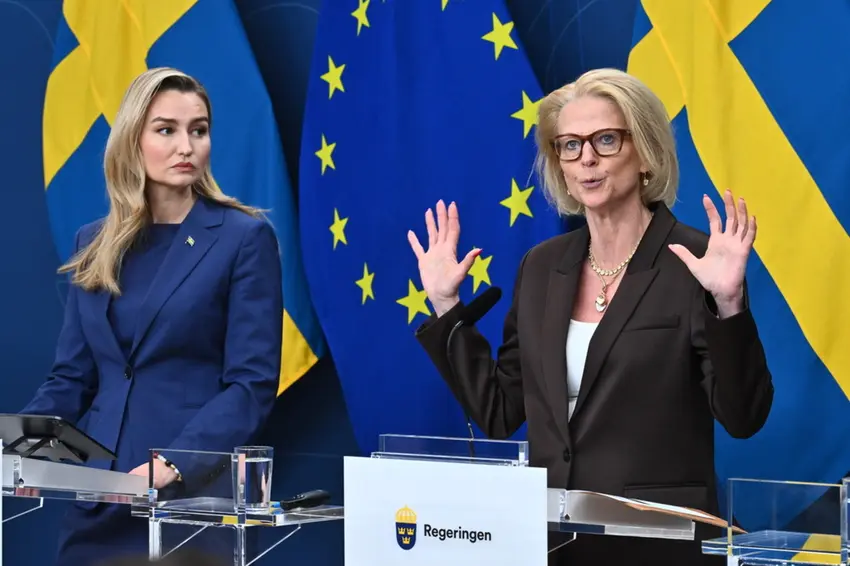
The aid package of 17.5 billion kronor is due to the global energy crisis.
"The reason we are doing this is obvious," said Finance Minister Elisabeth Svantesson. "The war in Iran is affecting the economy of Sweden and the Swedes. It is also the worst global energy crisis we have seen."
"Even if the war ends tomorrow, it will have economic consequences for a long time," she added.
The 17.5 billion crisis package is taking the form of an extra budget amendment. The idea is that the crisis package will be hammered out by parliament before its summer recess.
The measures that the Tidö parties have discussed are further reductions in fuel taxes, support for public transport, support for farmers for, among other things, higher fertiliser prices, and support for aviation.
The further reduction of taxes on petrol and diesel is for five months, from July 1st to November 30th. The government expects that this will reduce the price by three kronor per litre compared to what the price would otherwise be.
"This will have significant effects for households and people who need a car to get to work," said Martin Kinnunen of the Sweden Democrats.
The measure will cost the treasury 7.7 billion kronor. The European Commission has approved the reduction, but the Council of Ministers must also say yes, which is expected to happen shortly.
One billion will also be spent on "topping up" the electricity subsidy that will start being paid out in June for January and February. However, the billion does not mean more money for households, but rather that the subsidy has become more expensive than previously estimated.
The measures presented total 8.7 billion kronor. How the rest of the 17.5 billion will be used will be presented later.
The crisis package also includes support for cheaper public transport, according to Minister of Education and Liberal Party leader Simona Mohamsson.
"It will be a substantial discount that will be noticeable in people's wallets," she said.
She said that it was important for the Liberal Party that the package did not only reduce taxes on gasoline and diesel.
"It has been important for us that the state provides money so that bus passes becomes cheaper for those who, for example, commute to work every day," said Mohamsson.
However, she did not go into what the support looks like or how much cheaper the bus pass will be, saying the details will be presented later.
According to the Finance Minister, the crisis package is about keeping households and affected industries as damage-free as possible in the crisis.
All measures in the crisis package are temporary.
With additional reporting from TT
Comments