
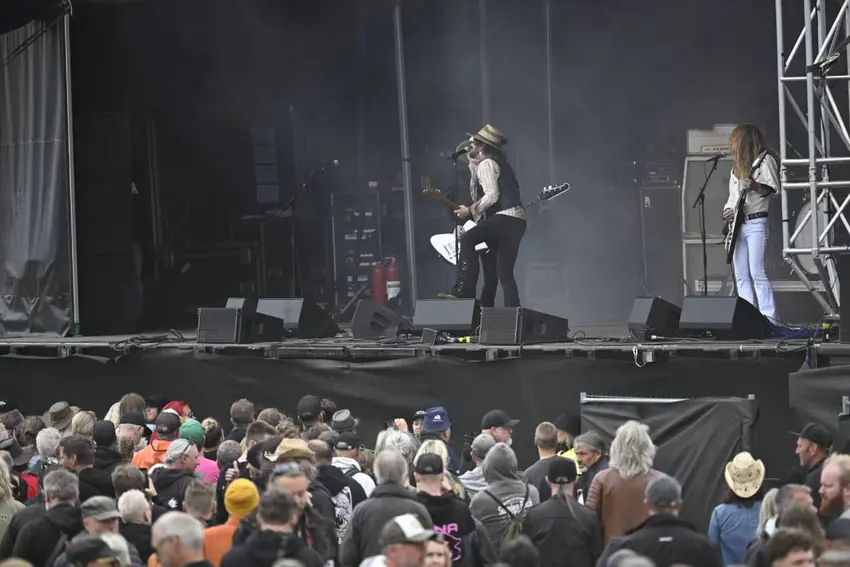
During summer in Sweden, countless festivals and concerts pop up all over the country.
As the weather warms up, people flock to events like South Ocean Festival in Malmö, the Stockholm Fringe Festival and the three-day long Way Out West festival in Gothenburg to enjoy the great performances and atmosphere.
READ MORE:
However, getting tickets can sometimes be tricky with so many eager attendees.
With high demand for these events, it's important to understand the rules around buying tickets in Sweden to avoid any hassles and be aware of potential scams, as they often attract people looking to take advantage of excited festival and concert-goers.
Key rules for ticket sales in Sweden
Buying tickets for concerts and events in Sweden comes with a set of rules and regulations that you should be aware of before making a purchase or reselling your ticket.
Here are some key points from the Swedish Consumer Agency (Konsumentverket), which potential ticket buyers (and sellers) should be aware of.
Second-hand tickets and cancellation policies
In Sweden, once you purchase a concert or event ticket first-hand, you do not have the right to cancel the purchase. This applies regardless of how the ticket was bought.
Unlike other online purchases, where there is generally a 14-day right of cancellation, this rule does not extend to event tickets.
However, this is not the case in the second-hand market (which is quite robust in Sweden).
As of December 2022, second-hand tickets must also honour cancellation policies, according to a decision from the National Board for Consumer Disputes (Swedish: Allmänna reklamationsnämnden, ARN).
So, if you purchase a second-hand ticket from a company, you have the right to cancel the purchase within 14 days.
What if my event gets cancelled or moved?
Swedish law requires that you receive a refund for your ticket if the event ends up being cancelled, regardless of the reason for cancellation.
Generally, you should have the full ticket price refunded (unless the terms you accepted say otherwise).
If only parts of an event, such as a multi-artist festival, are cancelled, you may be entitled to a partial refund. If an event is rescheduled, you should be able to choose between accepting the new date and requesting a refund.
If an unforeseen issue arises related to the refund, especially if you purchased your ticket through the secondary market, it's advisable to contact the seller in writing.
Keep in mind that refunds are typically limited to the original ticket price, excluding any additional fees or price increases from secondary sellers (more on that later).
Buying and selling second-hand tickets
Second-hand ticket sales are common and legal in Sweden, even if the ticket has the name of the original buyer on it.
The seller sets the price, often higher than the original cost (sellers are free to reprice the tickets in the country), and you, as the buyer, can choose to accept or decline.
This is different from the situation in Norway, for example, where the law states that ticket resellers can't increase the ticket price above its original cost.
How to avoid ticket scammers
Due to the popularity of major events in the country, the secondary market can be a breeding ground for scammers. Sweden's Konsumentverket also has advice for those looking to buy tickets, to stop people from falling victim to ticket fraud.
Here are some of Konsumentverket's tips.
READ ALSO:
Buying from anonymous resellers
Many people purchasing second-hand tickets for events like festivals or concerts often mistakenly believe they are buying directly from the original seller. This can lead to confusion when the ticket has a name or price different from what was expected. Sometimes, you might not even receive a valid ticket for the intended venue.
If you encounter issues with a purchased ticket, your first step should be to contact the seller. You have the right to receive what was agreed upon, including a refund if the ticket is unusable.
That's why buying from anonymous sellers can be risky - and should be avoided if possible.
The safest way to avoid scams is to purchase tickets directly from the event organiser or an authorised reseller (these are often listed on the event website), as this virtually guarantees that you can get a refund if the event is cancelled.
Common authorised resellers include fanSALE (Eventim's second-hand platform) and Ticketmaster's Resale platform. Both platforms limit the price of resold tickets - fanSALE forbids sellers from going above the original purchase price, while Ticketmaster allows a markup of up to 20 percent of the original ticket price for certain shows.
Foreign and suspicious websites
You should also be cautious with foreign websites, as scam ticket sellers often operate through temporary sites.
These sites might print the same ticket multiple times and sell it to several people- the so-called copy scam, where only the first buyer to use the ticket can gain entry, while the rest are left with worthless tickets, unable to enter the event.
Confirming the currency
Always confirm the currency in which you are paying to avoid surprises in the form of unexpected charges.
There have been fraud instances where people thought they were paying several hundred kronor for a concert ticket, only to find out they were charged several hundred euros instead.
Legitimacy checks
If you're buying from a private reseller, get their name, phone number, and address. A quick online search can also help verify their legitimacy.
Also, arrange to meet in person whenever possible to exchange money for tickets. That way, you can ensure that you'll receive a valid ticket on the spot by inspecting it.
READ MORE:
Using credit cards
Lastly, remember that making your purchase with a credit card or a payment service like PayPal or Klarna provides additional protection, as you can demand compensation from the bank or credit institution if you don't receive the ticket.
Visa debit card customers often receive similar protections, although Visa is not statutory obligated to refund the money.
Comments