
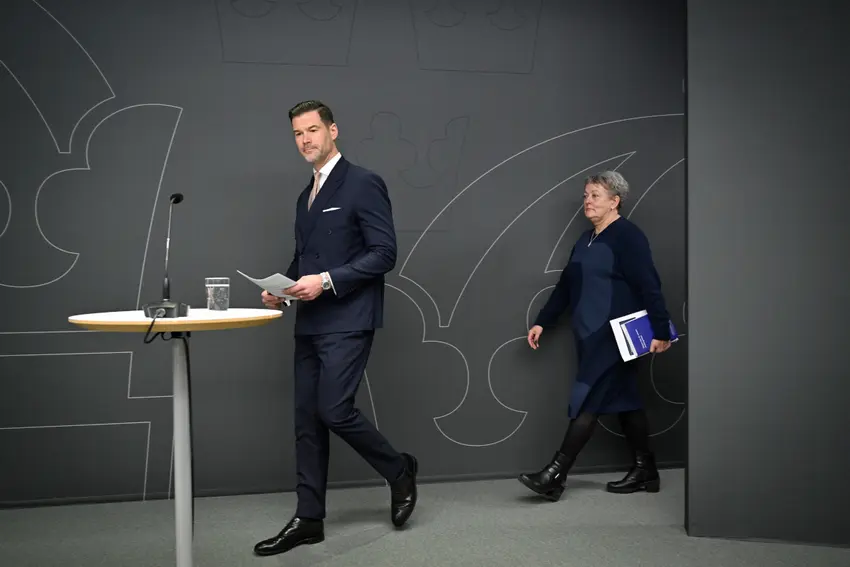
Judge Kirsi Laakso Utvik, who's been leading the inquiry into stricter citizenship rules, presented her report on Tuesday.
She proposed increasing the residency requirement from the current five years in standard cases to eight years.
KEY POINTS:
Some groups should be exempted due to international rules that Sweden is bound by, including refugees who should have a shorter waiting period of seven years, and stateless people who should have to wait five years.
Partners of Swedish citizens will have to wait seven years, if they've lived with or have been married to their Swedish partner for at least five years – and the Swede has been a citizen for at least five years. According to the current rules, they can apply for citizenship after three years (in practice four years for non-EU citizens).
Those who can't prove their identity will face the longest possible wait: ten years.
"You should feel proud to be a Swedish citizen, and you only feel proud once you've made an effort," said Migration Minister Johan Forssell, who told reporters the government and its Sweden Democrat partners would now analyse the report to see if it's far-reaching enough.
The inquiry stopped short of recommending a mandatory citizenship interview or oath of loyalty as the final step of the application procedure, saying organising them would be too much of an administrative headache and that a mandatory ceremony risked having the opposite effect.
Laakso Utvik did however propose tightening the requirement that applicants for citizenship have had an "upstanding way of life". At the moment, applicants must show that they do not have any debts to individuals or the state and have not committed any crimes – but they can apply after a certain time has passed since they committed the crime in question. This time could now be extended.
She also proposed introducing a self-sufficiency requirement. There is not currently any self-sufficiency requirement for those applying for Swedish citizenship, despite a similar requirement for applicants for permanent residence permits being in place since 2021.
The self-sufficiency requirement should be at the minimum the same as the amount of money a person who have had their wages withheld by the Swedish Enforcement Agency is allowed to keep, which today is 6,186 kronor per month for a single adult without children.
"The time when the Swedish citizenship was handed out almost without any demands is definitely over," said Forssell.
The government has previously proposed introducing language and civics tests for citizenship, and this inquiry was tasked with determining whether those tests should include any additional topics.
The new inquiry proposed adding another section to the civics test on “The role of media as disseminators of information, formers of opinion and examiners of society’s power structures,” as well as ensuring that information on the rights of children according to the UN Convention on the Rights of the Child are included in the section on human rights.
The proposed changes are set to come into force on June 1st, 2026, and should not apply retroactively to people who apply for citizenship before the new rules come into force, according to the inquiry.
The changing citizenship rules are a major part of the government's so-called "migration paradigm shift".
On Wednesday, another committee is set to recommend changing the constitution on citizenship, making it possible to also revoke dual citizenships in some cases.
The Local will cover the inquiry in more depth as soon as we have our hands on the report, so keep an eye out on www.thelocal.se for more articles over the course of the day, or, to make sure you don't miss any updates, download our app (available on Apple and Android) and then select Swedish Citizenship in your Notification options via the User button.
 Becky Waterton, Editor, The Local Denmark

Comments (33)