
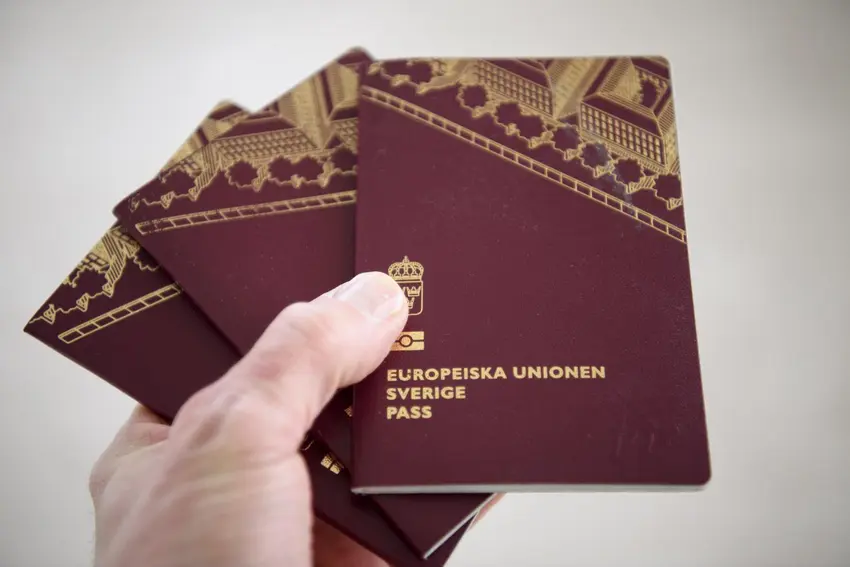
A major inquiry into tightening the requirements for Swedish citizenship presented its final report to the government on January 14th, including a proposal to extend the residence requirement to eight years, introducing a self-sufficiency requirement and raising the application fee from 1,500 kronor to 2,900 kronor.
CITIZENSHIP REFORM:
- Swedish inquiry proposes almost doubling fee for citizenship
- KEY POINTS: Sweden's plans for tougher citizenship rules
- Swedish government inquiry proposes increasing citizenship wait to eight years
Since the news broke, we've had a lot of questions from readers, which we'll try to answer in this article.
If you have a question on citizenship which has not yet been answered, please let us know and we'll do our best to find out the answer for you.
Under the new citizenship proposal in Sweden, will years spent on a study permit count towards naturalisation? Currently, in some EU countries, the time spent on a study permit counts towards citizenship.
For instance, if the proposed residency requirement for citizenship is set to eight years, individuals who arrived as students may still need to spend up to ten years in total (including the study period) to qualify for naturalisation. Could you clarify whether this proposal includes changes that would allow time on a student visa to contribute towards the required residency period for citizenship?
The proposed changes to the residency requirement only refer to the length of time you have to have lived in Sweden, which is referred to in Swedish as hemvist. There are no proposals to change the definition of hemvist, whether that’s to allow those on student permits or other groups to start counting their time in Sweden towards citizenship earlier. So that means the answer to the question is no.
Is this not going to make Sweden less attractive to highly skilled workers?
The government doesn't seem to think so.
Migration Minister Johan Forssell told The Local that he did not believe the new rules would make Sweden less attractive to highly-skilled workers or drive them away to other countries with more lenient rules.
“When discussing this issue together with many highly skilled labour migrants, but also with multinational companies, this is not a question that has been raised,” he said.
“There seem to be many more important questions for them, regarding taxation, the housing situation, schools etc. The kind of requirements that we’re imposing, to have a job etc, this is not a problem for them.”
He added that the new rules could even mean that more highly-skilled migrants come to Sweden.
“On the contrary, I would say that we would even have more of these highly skilled people coming to Sweden, if you’re a Nordic citizen, for example, you will not be affected by this. So no, I don’t see a great risk of that.”
Currently, time spent outside Sweden exceeding six weeks is deducted from the five-year residency requirement. If this requirement is extended to eight years, will the 42-day allowance remain the same, or will it increase to, say, 60 days?
There is no information about this in the inquiry report or in the inquiry’s proposed changes to the law, so it’s not yet clear.
What are the rules for kids that have parents with Swedish citizenship? Before they had to wait three years before getting permanent residency and then could apply for citizenship. Has this also changed?
Children under the age of 15 will need to both have permanent residency in Sweden and have lived in Sweden for three years, as a general rule (two years if they are stateless or a Nordic citizen).
If they’re aged 12 or over, they will have to consent to applying for citizenship. If they’re 15 or over, the residence requirement rises to five years, and they will also have to meet the requirements on a hederligt levnadssätt – so no outstanding debts and no convictions. Those aged 16 and above will also need to pass a Swedish language test and a civics test.
This inquiry has not made any proposals to change permanent residence permits, as it wasn’t asked to look at this.
In six months' time I’ll be eligible to apply for citizenship. Will they review my case based on the old rules or the new ones?
It increasingly looks like even applications sent in this year could end up being assessed under the new rules.
The inquiry said that there should be a transitional period, so essentially it recommended that people who applied before June 1st, 2026, be processed under the old rules.
But Migration Minister Forssell told the TT newswire at the start of February that he wanted the new rules to apply "immediately", meaning that all citizenship decisions taken after June 1st 2026 will be assessed under the new rules, regardless of when the initial application was sent in.
"In the last year alone, we had 600 security cases connected to citizenship, and I think that it is important when we are overhauling the whole rulebook on citizenship that these changes apply immediately, so that the Säpo security police have a better chance of keeping checks on these people," he said.
If these rules are applied retroactively, what happens to the fee deposited with the application in queue fulfilling the five years criteria that exists today but not fulfilling the eight years criteria? Will they all be declined and money not be returned? How do they plan to handle that?
We don’t know yet. The inquiry doesn’t mention anything about this, as it advises against applying the rules retroactively, and Forssell didn't cover this issue in his February interview.
As a general rule, citizenship application fees are not refunded if your application is denied, so it’s likely that this would apply even in a situation where you met the criteria at the time of application but not at the time your application is processed.
Is there any indication of how this June 1st, 2026, date will be reconciled with the distinct-but-related proposal of July 1st, 2027, for implementing language / knowledge requirement tests for permanent residency? Easy to imagine there’d be a dependency on the latter to fully implement the former.
The July 1st, 2027, proposal refers to permanent residency, not citizenship. There is another, separate proposal on implementing a language and knowledge requirement on citizenship, which is essentially ready to go – it had a suggested implementation date of January 1st, 2025, but this has of course been delayed.
The proposed changes to the law in the most recent inquiry report on citizenship refers to the law changes proposed in the inquiry on new language and knowledge requirements, so it’s safe to say that they expect that the rules will either come into effect simultaneously, or that the language and knowledge tests will be in place before June 1st, 2026.
This does mean that there could be a period of a year or so where applicants for permanent residency do not need to show an understanding of Swedish language or society, but applicants for citizenship do.
Why does this read like refugees get special treatment?
The rules on refugees are determined by the 1951 UN Refugee Convention, of which Sweden is a signatory, which among other things states that refugees should be given favourable conditions when it comes to gaining citizenship. This can include, for example, shorter residency requirements, cheaper application fees and less strict language requirements.
So this is not a political decision, rather it’s a decision based on the rules set out in this convention.
Why do people married to or living with a Swede get special treatment?
This is also due to international treaty obligations which mean Sweden has to offer favourable conditions to spouses or partners of Swedes.
Any news on what kind of impact this will have for Swedish EU Blue Card holders? My understanding is that citizenship can be applied for after four years under the current rules of the scheme.
There are no specific exceptions for EU Blue Card holders.
They will need to have permanent residency, which they can apply for after 48 months (four years). On top of that, they will also need to meet the new eight-year residency requirement.
Any clarification regarding EU citizens vs non-EU citizens regarding the eight years?
The rules will be the same for both groups.
These are the only exceptions to the eight-year rule proposed in the inquiry:
- Nordic citizens (Danish, Finnish, Icelandic or Norwegian), who can apply after two years
- Stateless people and children aged 15 or above, who can apply after five years
- Refugees, partners of Swedes and those aged between 18-21, who can apply after seven years
- People who cannot prove their identity, who can apply after ten years
- Children aged 15 or below, who can apply after three years
Is there anything about the language/culture requirements? Have they been dismissed from the proposal?
No, they’re still going to be included.
Another inquiry set up by the previous Social Democrat government has already proposed introducing language and civics tests for citizenship, and this new inquiry was tasked with determining whether those tests should include any additional topics.
The new inquiry proposed adding another section to the civics test on “The role of media as disseminators of information, formers of opinion and examiners of society’s power structures,” as well as ensuring that information on the rights of children according to the UN Convention on the Rights of the Child are included in the section on human rights.
Will there be any ‘fast track’ for some categories of permit holders? Like pass a civic exam, prove the knowledge of Swedish?
No, the only proposed exceptions to the eight-year rule are listed above. There are currently no plans to allow applicants who have passed civics and language tests to qualify for citizenship early.
What happens now?
The press conference presenting the results of the inquiry is only the fourth step in Sweden's nine-step legislative process.
The next stage is the remiss, which is essentially the consultation stage, where the report and its proposals are sent for consultation to the relevant government agencies or organisations, municipalities and other stakeholders, who can submit their responses, remissvar. Private individuals or groups can also send in their own responses to the consultation at this stage.
The government will then decide whether it will proceed with the law (in this case, it almost certainly will), and whether it will make any changes to the proposals made by the inquiry.
"We will look into the whole inquiry," Forssell told The Local. "The proposals, are they what we had asked for? Should we make any adjustments?"
Then the draft bill will be sent to the Swedish Council on Legislation, who will analyse it from a legal standpoint – this is purely advisory and the government can ignore the Council's recommendations – before finally being sent to parliament for a vote.
Comments (18)