
The inquiry, led by the judge and former Sweden Democrat official Josephine Boswell, covered one of the most controversial policy proposals in the government's support agreement with the far-right Sweden Democrats, looking at abolishing permanent residency for future asylum-related migrants and stripping it away from those who already have it.
The Church of Sweden said it was rejecting the proposal, made in the second part of the inquiry, to introduce a "special law" to strip away existing permanent residency permits.
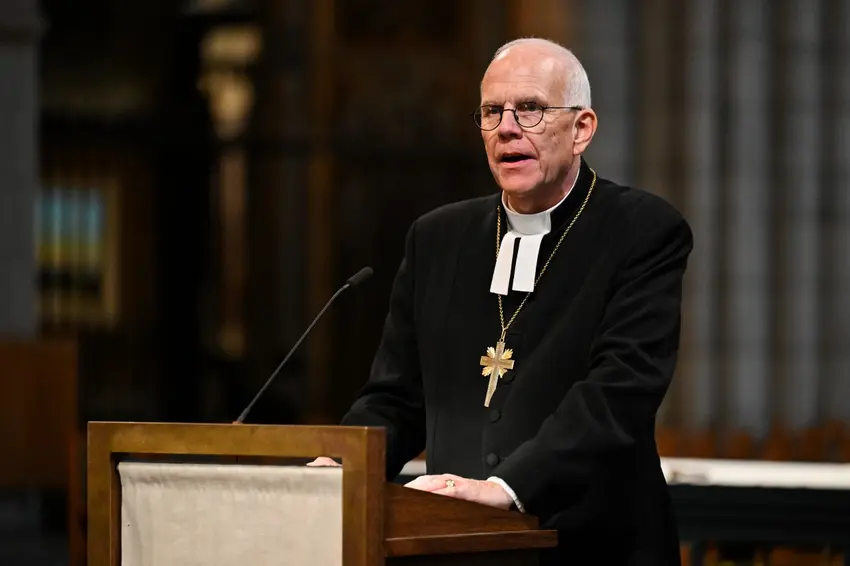
"The proposal risks causing unreasonably serious negative consequences for those affected, many of whom are children," read the response, signed by Martin Modéus, the Archbishop of Uppsala and primate of the Church of Sweden. "The Church considers the proposal disproportionate and contrary to established legal principles and the principle of human dignity."
The church also criticised the inquiry's conclusions from a legal and administrative standpoint, complaining that there had been insufficient analysis of its consequences, both for children and integration, and that the inquiry had not sufficiently analysed the repercussions for the legal system, government agencies and society at large.
The Church of Sweden's consultation response is arguably the most critical of the 17 submitted by December 11th, with one week left to go before the deadline.
Sweden's migration minister, Johan Forssell, has still not confirmed whether the government will submit a law to parliament to enact the inquiry's conclusions.
READ ALSO: Who would lose permanent residency under Sweden's 'special law'?
In its response, the church stressed that the proposal would primarily target asylum seekers and their families, a group it said were "often particularly vulnerable". Up to 16,800 of those affected, it noted, would be children.
If enacted, the proposal would thrust these people into a "state of uncertainty", a situation the Church said contradicted its view of "human dignity" and the "responsibility to support one’s fellow human being".
The church acknowledged that the Swedish constitution did, in some circumstances, allow laws to apply retroactively on civil matters, but it questioned whether it was appropriate in this case.
"The current proposal, to retroactively revoke permanent residence from individuals who have done nothing wrong, contradicts core principles of predictability and proportionality," it said. "A predictable legal system is fundamental to the rule of law."
As such, the Church continued, the law could conflict with Sweden’s international obligations, including the European Convention on Human Rights and the Convention on the Rights of the Child.
Comments (2)