
The inquiry defined the phrase "damaging society's vital interests" to include crimes under the Weapons Act, Benefit Fraud Act, Act on Flammable and Explosive Goods, and Money Laundering Penal Act, with those found guilty of such crimes liable to lose their citizenship if found guilty of an offence sufficiently serious to warrant a jail sentence of four years or more.
"There are some people who have committed very, very serious crimes – that could be terrorism, that could be espionage, that could be gang-related violence – and they should not be in Sweden," Migration Minister Johan Forssell told The Local. "They should not be Swedish citizens."
At the press conference, he said police estimated there were currently 1,400 gang criminals in Sweden with dual citizenship, who would be at risk of being stripped of their citizenship and deported if the law is passed.
"A person with Swedish citizenship cannot be deported, even if they have citizenship in another country. Revoking citizenship would change that and create entirely new opportunities to deport these individuals."
The people who would be at risk of deportation, he claimed, were people with "a terrible capacity for violence", who "lack respect for other people's safety, and challenge very fundamental and important values in our society".
The inquiry recommends that the changes come into force on January 1st, 2028, and apply only to citizenships acquired or crimes committed after the law enters into force. For a perpetrator's citizenship to be at risk, the crimes need to have been committed "within the bounds of a criminal network".
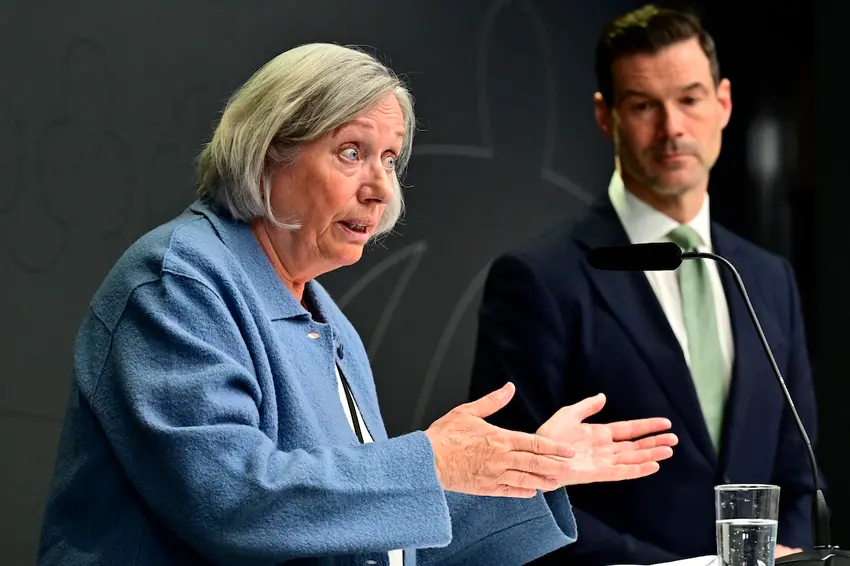
Even young people under the age of 18 who were Swedish citizens at birth should be liable to lose their Swedish citizenship for committing crimes, although the inquiry's chair Anita Linder said this would be subject to a proportionality assessment and an appraisal of the best interests of a child. She also recommends that children of those stripped of Swedish citizenship should themselves be liable to lose their citizenship.
Sweden's parliament is scheduled to vote in May on changes to the constitution allowing dual citizens to be stripped of Swedish citizenship in certain circumstances. For the change to apply, parliament needs to vote on it a second time after the election in September.
At the press conference Forssell said the government aimed to submit a draft law to the Council on Legislation before the election. He refused to commit to following the inquiry's recommendation that the new rules should not apply retroactively.
The cross-party Committee on Fundamental Rights and Freedoms in January 2025 recommended a limited change to the constitution, which would only cover "serious crimes which threaten national security or are covered by the jurisdiction of the International Criminal Court".
The government parties, in a break with the tradition of unanimity on constitutional changes, then filed an alternative proposal that would include "crimes that seriously harm Sweden’s vital interests”, a category, it argued, that would include “certain serious, system-threatening” gang criminality.
The opposition Social Democrats initially criticised this as too vague, but in January changed position, saying they would support the law.
At the press conference, Forssell pointed out several opposition parties still opposed the change.
"This is going to be an election issue where each party is going to have to explain their position," he said. "The Left Party, Green Party and Centre Party have already said that they don't want to enact this if it is about crimes against the vital interests of the state."
The proposal also recommended that it should be possible to strip citizenship from dual citizens who have received citizenship on the basis of false information, through fraud, or through bribing or threatening a public official.
"These changes are very important because of the fact that we know that some people have come to Sweden, they have a Swedish citizenship, despite the fact that they have misled Swedish authorities," Forssell told The Local. "And of course, that is not in line with what we want to see."
As well as gang crimes, Linder also proposed the revocation of Swedish citizenship for "crimes which threaten Sweden's security", defining this to include high treason, espionage, sabotage, crimes intended to endanger Sweden's security or damage central social functions, and terrorist offences.
As with the gang crimes, those found guilty would only be liable to lose their citizenship if the maximum penalty for the crime is four years or more in prison.
Comments (1)