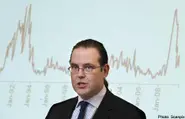
With growth faltering nationally, and the prospect of hard Brexit and a global trade war on the horizon, is it time for Sweden to start getting ready for an economic downturn?
The deep financial crisis in Europe has led to more Greek citizens arriving in Sweden to seek employment, with twice as many coming 2011 compared to the year before.
The Swedish economy grew a faster-than-expected 1.4 percent in the second quarter, compared with the first three months of the year, official data showed Monday.
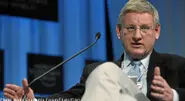
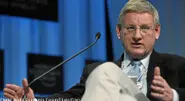
The impact of the global financial crisis would have been worse on the EU the euro had not provided the necessary monetary stability, Swedish foreign minister Carl Bildt said on Thursday.
European leaders have failed to help solve the current debt crisis, and Sweden shouldn't think of signing on to a plan that amounts to an attempt to remake Europe into a super-bureaucratized dream, argues Swedish liberal commentator <b>Johan Norberg</b>.
Sweden was one of four European Union member states to scupper hopes of a 27-country agreement to help strengthen the euro, but nevertheless plans to participate in the creation of a European bailout fund.
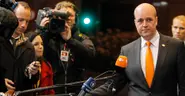
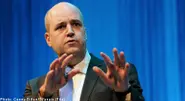
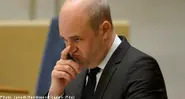
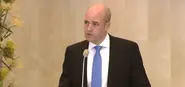
European Union treaty changes are not the euro debt crisis solution the markets want, Swedish Prime Minister Fredrik Reinfeldt said on Thursday ahead of a crucial EU summit in Brussels.
Foreign Minister Carl Bildt on Monday defended a European single market but said that stricter budget supervision and regulation by Brussels will only work if already existing rules are adhered to.
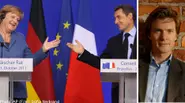
Swedish prime minister Fredrik Reinfeldt took a doubtful stance to the "true economic governance" within the eurozone called for by French president Nicolas Sarkozy and German chancellor Angela Merkel on Tuesday.
The ongoing financial crisis in the US is causing growing concern among locals in the municipality of Pajala in the North of Sweden, whose future is largely dependent on an iron ore ore mine due to be opened by an American company.
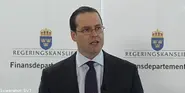
Sweden's finance minister Anders Borg on Thursday warned that the government will need to revise down its strong economic growth expectations for 2012 due to the global financial market turbulence.
Sweden's finance minister Anders Borg on Monday promised a "cautious" economic policy as he commented on turbulence in global stock markets. Trading in Stockholm meanwhile nosedived as a mid-morning rally ran out of steam.
Swedish experts say Sweden won't avoid being affected by the turbulent world economy and on Sunday financial spokesperson for the Social Democrats, Tommy Waidelich, said that he wants to gather the Riksdag’s financial committee to discuss the situation.
Swedish finance minister Anders Borg attempted to reassure worried investors in the wake of stock market drops across Europe on Friday, but admitted that financial markets remained "turbulent".
The head of Sweden's central bank said on Thursday that the financial crisis is over, but warned about the potential risks associated with an increasingly strong krona.
<b>Many European countries are facing austerity measures in the wake of the financial crisis. Now it's time for the EU itself to get serious about tackling waste, writes Anna Kinberg Batra, chair of the Swedish Parliament's Committee on EU Affairs.</b>
Increasing concern about the European debt crisis and renewed tensions between North and South Korea caused share prices in Stockholm to fall sharply on Tuesday.
The Riksbank decided on Tuesday to leave the leave Sweden’s benchmark interest rate unchanged at 0.25 percent, but indicated that rate hikes were likely later in 2010.
The State’s finances will recover faster than what was earlier estimated, following Sweden’s faster-than-expected recovery from the financial crisis, the government has announced. The State’s budget should now be balanced or in surplus by 2013/2014.
The Stockholm stock exchange fell by 3.1 percent on Thursday in response to an announcement that Dubai World has requested deferment on its $59 billion mountain of debt.
Sweden's finance minister Anders Borg warned EU leaders on Thursday that states cannot keep throwing good money after bad and called for a discussion to supervise the easing of expansionary fiscal policy.