
In the US, liberal news media are reporting with horror that several Republican-led states will penalise schools that require masks. This despite the number of infected children soaring, not least in Republican states such as Florida and Texas, and despite leading public health experts including the American Academy of Pediatrics and the Centers for Disease Control and Prevention recommending universal indoor masking in schools this year.
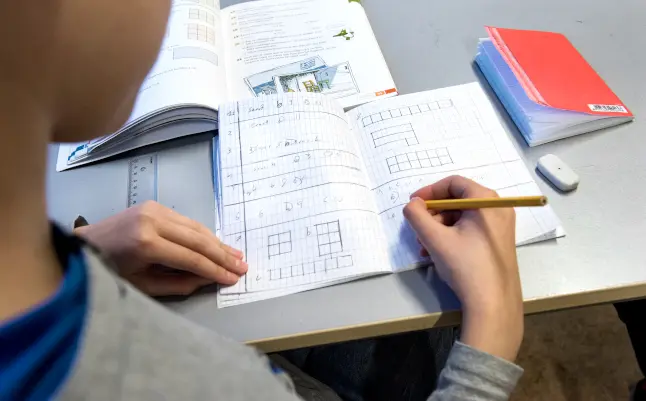
In Swedish schools, you’d be hard-pressed to find any measures at all, if you don’t count a few bottles of sanitiser here and there and (at least in some schools, and at least in the first months of the pandemic) extra spacious seating in the dining halls. Masks have never been mandatory or even socially accepted here – certainly not in the classrooms. Yet this school year, närundervisning (in-school teaching, or literally "close teaching") will replace distance learning.
Instructions to schools from the Public Health Agency of Sweden are meek and, just as the Swedish pandemic strategy as a whole, based on "recommendations", "advice", "suggestions" and the like, rather than mandatory rules. "If possible, work in smaller groups [than usual],” and so on.
On August 12th, the Public Health Agency and The Swedish National Agency for Education (Skolverket) announced that the possibility of preventive distance learning has been removed. This in the face of renewed spread and mutated strains. As opposed to neighbouring countries Finland and Denmark, Sweden hasn’t lowered the recommended vaccine age to include children, instead sticking with 16 years of age (thus excluding the entire elementary school system).
To some parents, foreign and Swedish-born alike, this idea of business as usual is a relief. Not that they don’t care about their children’s well-being, but rather that the unique Swedish approach to Covid-19 has allowed for young school-aged children to live normal lives during a potentially frightening global crisis.
Many of us who have friends and family abroad know what a toll regular school closings and futile attempts at homeschooling have taken on parents and pupils alike. I have close friends in London who were all nearly having a nervous breakdown at different times during the past year, their young, hyper-energetic broods literally "climbing the walls” (as we say in Sweden) out of frustration.
On the other side of these walls, mums and dads were trying and failing to have serious job conversations over Skype. It would have been funny for a week or two, a story to tell the grandchildren, but months on end, with no end in sight? No wonder European psychiatric helplines have nearly crashed from the number of desperate callers.
But there’s also a group of Sweden-based parents increasingly worried about the country’s lax attitude towards Covid-19, not least in the classrooms. As the new Delta variant of the virus is dominating the spread, and infection rates are increasing in major cities like Stockholm, anxiety is brewing over the return to schools this week.
MORE BY LISA BJURWALD:
The message from the Swedish government and Public Health Agency has consistently been that kids don’t get sick from the coronavirus. But reports of Long Covid in children tell a different story. While children fortunately end up in hospital emergency units very rarely, they can develop the same debilitating post-Covid symptoms as adults, including extreme tiredness, recurring fever spells, and frightening cognitive symptoms like "brain fog” with difficulties focusing.
No one knows how long Long Covid lasts. Tens of thousands of those infected in the spring of 2020 around the globe are still suffering from the after-effects. The WHO has acknowledged post-Covid as a global health concern. Networks and organisations for the affected have been set up, clinical research initiated. But the Swedish response has been gruellingly slow, particularly in comparison with countries such as the United Kingdom, where a heap of special post-Covid clinics has been set up to care for the ill.
A recent report from the Swedish Children’s Ombudsman studied the consequences of Covid-19 on children’s rights and found that a surprising number of Swedish children are suffering from severe, life-altering post-Covid symptoms. I write in-depth in Swedish about the report here.
The fact that children can be negatively affected physically by the virus puts the Swedish pandemic school strategy – or lack thereof – in a different light.
A measured, fact-based response is preferable to a gut reaction driven by fear and/or populism, as seen across the world since the outbreak early last year. If children could neither get infected nor spread the potentially deadly disease, schools could pretty much be exempt from preventive measures.
But now, a year and a half into the Covid-19 pandemic, science tells us differently. Children can both spread the virus to vulnerable family members – especially with the sneakier Delta variant – and suffer severe post-Covid symptoms themselves, even if the infection itself was mild.
With this knowledge in mind, the lack of protection for our youngest citizens and the nonchalant attitudes from those in power cannot be described as anything else but irresponsible. I believe that this will be a major issue of regret and reckoning for Sweden in the post-pandemic years.
Lisa Bjurwald is a Swedish journalist and author covering current affairs, culture and politics since the mid-1990s. Her latest work BB-krisen, on the Swedish maternity care crisis, was dubbed Best reportage book of 2019 by Aftonbladet daily newspaper. She is also an external columnist for The Local – read her columns here.
Comments (17)