People tend to believe two things about Swedish taxes: firstly, that they are extremely high and, secondly, that Swedes pay them readily because of the high level of public services they receive in return and their commitment to the welfare state.
Sweden has been ranked top of an index assessing social, environmental and economic development, with the other four Scandinavian nations completing the top five.
A new survey has exposed Sweden's growing wealth gap, with the number of houses in the middle income bracket in the country falling in all but four of its municipalities between 2011 and 2015.
Swedes are richer than ever before, but household debt in the country continues to grow at the same time, new statistics from one of the country’s major banks show.
UPDATED: Swedish residents remain the fourth wealthiest people in Europe, according to a global report released on Tuesday. But the study also highlighted inequality in the Scandinavian country.
Tax cuts have long been the hallmark of Sweden's Moderate Party. Why then, is the party no longer campaigning on a promise to reduce taxes further? Liberal commentator <b>Nima Sanandaji</b> explains.
Stockholm has been named among the top ten richest regions in the European Union according to a new study published in the Svenska Dagbladet daily on Sunday.
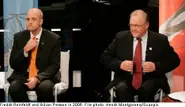
Prime Minister Fredrik Reinfeldt blamed the Social Democrats for Sweden's growing wealth gap following the publication on Monday of a report showing that Swedes are nevertheless much better off today than they were a decade ago.
While Swedish households have seen their wealth grow in the past four decades, many Swedes have seen their debts increase as well, according to new figures.
The number of Swedish “dollar” millionaires reached a staggering 60,900 last year, signifying an increase in Sweden by 26 percent, according to the annual World Wealth Report, carried out by companies Cap Gemini and Merrill Lynch.
While US voters shunned the Democratic Party's traditionally redistributive policies in Tuesday's mid-term elections, most Americans actually prefer a wealth distribution model similar to Sweden's, writes the AFP's <b>Andrew Beatty</b>.
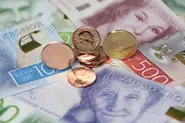
Swedes’ personal wealth increased 2.8 percent to 6,990 billion kronor in the first quarter of 2010, according to SEB bank. The figure means Swedes are richer than ever before.
Swedish household wealth has rebounded strongly in 2009 and has now clawed back half of the 976 billion kronor ($143 billion) fall in the wake of the stock market crash.
The recent devaluation of the Swedish krona has made the nation poorer. If the currency's 15 percent decline against the euro stands there is a risk of Sweden dropping down the OECD wealth league table, analysts predict.
Swedish households’ net wealth fell by 6.6 percent, or 185 billion kronor ($24.3 billion), during the third quarter of 2008, with losses from shares and funds accounting for 45 percent of the drop.
Despite their billions, Sweden’s wealthiest individuals have shown that not even they can withstand the effects of the financial crisis coupled with a dismal year on the stock market.
The most expensive house sold in Sweden in 2007 was a detached home in Stockholm's Djursholm district, which was sold to a Russian businessman for 44.75 million kronor ($6.98 million), according to a new list published by Svenska Dagbladet.
Sweden's parliament on Monday voted in favour of abolishing the country's wealth and property taxes in 2008 following proposals presented by the centre-right government earlier this year.
Ikea founder Ingvar Kamprad remains by far the richest man in Sweden, with an estimated fortune of 530 billion kronor ($84.37 billion), according to a new survey by Veckans Affärer magazine.
Swedes do not work hard enough - at least in the eyes of many millionaires. But the well-off readers of Connoisseur magazine do not consider that they themselves work too little.