
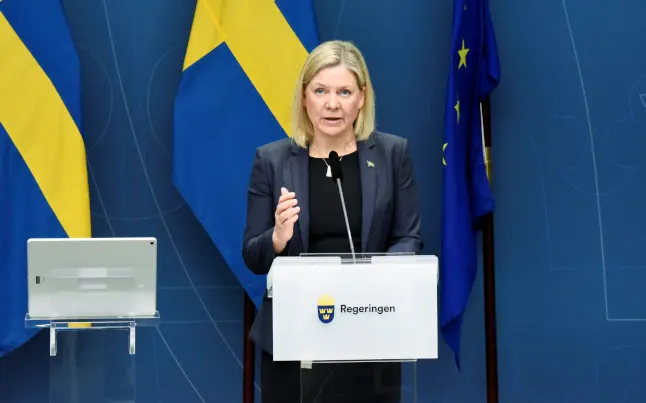
Joined by Health Minister Lena Hallengren and the directors-general of the Public Health Agency and National Board of Health and Welfare at a press conference at noon, Andersson announced a several new restrictions to curb Sweden's "record high spread of infection".
"It is undoubtedly the case that the situation has deteriorated. The spread of infection in Sweden is at historically high levels," she said.
The new rules, which will come into force on January 12th, will force bars and restaurants to close at 11pm. They also have to limit groups to eight people, seated at least a metre apart and only have table service, but vaccine passes will not be rolled out for restaurants at this stage.
Andersson said a new allmänt råd will be introduced for adults to limit their number of close contacts indoors. Allmänt råd can be translated to "general/public recommendation" and has been described by the Public Health Agency's chief legal officer as "something in between regulations and recommendations". There are generally no fines for violating it, but it has a basis in law and is not considered optional. Sweden's Communicable Diseases Act requires everyone to take "reasonable precautions to curb the spread of infectious diseases".
"I want to strongly emphasise that everyone who can work from home should do so," said Andersson.
Indoor public events with more than 20 attendees will only be allowed to go ahead if everyone is seated and limited to groups of eight people, seated at least a metre apart. Public events with more than 50 attendees must additionally require a valid Covid vaccine pass.
Universities will not be forced to move to distance teaching full time, but they may "use it as a tool" to limit crowding, said Andersson. Exams should go ahead as before with measures in place to limit the risk of infection, according to the Public Health Agency's restrictions.
Here's a full list of the new measures (in Swedish) and here's a list by The Local in English.
The Public Health Agency has also asked the government to scrap a requirement for foreign visitors to show a negative Covid test to enter Sweden, but reintroduce the Covid pass for adults. A government spokesperson confirmed to The Local that they had received a request and were processing it, but as a final decision had not yet been made, no date could be confirmed for when this may change.
Sweden last week reported its highest daily number of confirmed new Covid infections during the course of the pandemic.
According to public broadcaster SVT's database, which collects information from official sources, the number of Covid-19 patients in intensive care has gone down in the past week, from 121 last Monday to 101 today. The number of Covid-19 inpatients in other hospital wards than intensive care units is however still on the increase: 917 patients according to SVT's latest data on Friday, up from 685 on Monday last week.
Editor's note: Andersson initially told the press conference that the new restrictions would come into force on "January 14th", but she and Public Health Agency officials later clarified that the date had been updated and they will in fact apply from January 12th.
Comments (9)